Thursday, January 8, 2026

DT26004 Twenty Significant Mathematicians V01 080126


1. Euclid (c. 300 BCE) – Father of Geometry

Euclid is one of the most influential mathematicians in history, best known for Elements, a thirteen-book work that systematically organized geometry and number theory. His axiomatic method—starting from definitions, postulates, and logical proofs—became the foundation of mathematical reasoning for over two millennia. Euclid’s geometry introduced concepts such as points, lines, planes, and angles in a rigorous way that is still taught today as “Euclidean geometry.” Beyond geometry, Elements also explored ratios and prime numbers. Euclid’s logical structure shaped not only mathematics but also philosophy and science.


2. Archimedes (c. 287–212 BCE) – Inventor and Geometrician

Archimedes was a Greek mathematician, physicist, and engineer whose work blended theoretical brilliance with practical invention. He made groundbreaking contributions to geometry, discovering formulas for the area and volume of shapes such as spheres, cylinders, and cones. Archimedes is also famous for approximating the value of π with remarkable accuracy. His principle of buoyancy laid the foundation for hydrostatics, while inventions like the Archimedean screw are still used today. Often considered the greatest mathematician of antiquity, Archimedes combined deep abstract thinking with real-world applications in engineering and mechanics.


3. Isaac Newton (1643–1727) – Calculus and Classical Mechanics

Isaac Newton was an English mathematician and physicist whose work revolutionized science. He co-invented calculus (independently of Leibniz), providing powerful tools to analyze change and motion. Newton’s Principia Mathematica formulated the laws of motion and universal gravitation, unifying mathematics and physics in a single framework. His mathematical innovations included infinite series, binomial expansions, and early numerical methods. Newton viewed mathematics as a language for understanding nature, and his ideas dominated scientific thought for centuries, shaping astronomy, engineering, and physics well into the modern era.


4. Leonhard Euler (1707–1783) – Graph Theory and Euler’s Identity

Leonhard Euler was one of the most prolific mathematicians of all time, producing hundreds of papers across nearly every branch of mathematics. He introduced much of today’s mathematical notation, including e, i, and function notation f(x). Euler made foundational contributions to graph theory, topology, number theory, and calculus. His famous identity e^{i\pi} + 1 = 0 elegantly connects five fundamental constants. Despite losing his eyesight later in life, Euler continued producing groundbreaking work, leaving an enduring legacy that permeates modern mathematics and science.


5. Carl Friedrich Gauss (1777–1855) – Number Theory and Statistics

Often called the “Prince of Mathematicians,” Carl Friedrich Gauss made profound contributions across mathematics and science. His work in number theory, including modular arithmetic and quadratic reciprocity, reshaped the field. Gauss also contributed to statistics, introducing the normal (Gaussian) distribution. Beyond pure mathematics, he advanced astronomy, geodesy, magnetism, and physics. Gauss was known for extraordinary mental calculation skills and intellectual rigor, often publishing only work he considered perfect. His influence remains central to modern mathematics, earning him a reputation as one of history’s greatest mathematical minds.


6. Joseph Fourier (1768–1830) – Fourier Series and Transform

Joseph Fourier was a French mathematician best known for introducing Fourier series, which represent complex functions as sums of sine and cosine waves. His work arose from studying heat conduction, linking mathematics with physical phenomena. Fourier’s ideas revolutionized mathematical physics and later became essential in signal processing, engineering, quantum mechanics, and data science. Although controversial at first, his methods proved extraordinarily powerful. Today, Fourier transforms are fundamental tools in image compression, audio processing, and scientific analysis, making Fourier’s work one of the most practically influential contributions in mathematical history.


7. Sophie Germain (1776–1831) – Elasticity and Number Theory

Sophie Germain was a pioneering French mathematician who overcame significant barriers to women in science. She made important contributions to number theory, particularly in work related to Fermat’s Last Theorem through what are now called Sophie Germain primes. Germain also played a key role in the development of elasticity theory, studying vibrations of elastic surfaces. Often forced to publish under a male pseudonym, she gained respect from leading mathematicians such as Gauss. Her perseverance and intellectual achievements paved the way for future generations of women in mathematics.


8. Évariste Galois (1811–1832) – Group Theory and Algebra

Évariste Galois was a French mathematical prodigy whose revolutionary ideas transformed algebra before his untimely death at age 20. He developed group theory to understand when polynomial equations can be solved using radicals. Galois’ work connected symmetry with algebraic structure, laying foundations for modern abstract algebra. His ideas were largely ignored during his lifetime but later recognized as profoundly influential. Today, Galois theory is central to algebra, number theory, and physics. His dramatic life story and mathematical genius have made him a legendary figure in mathematics.


9. Bernhard Riemann (1826–1866) – Riemann Hypothesis and Manifolds

Bernhard Riemann was a German mathematician whose deep, abstract ideas reshaped analysis, geometry, and number theory. He introduced Riemannian geometry, which generalizes curved spaces and later became essential to Einstein’s theory of general relativity. Riemann also proposed the Riemann Hypothesis, one of the most famous unsolved problems in mathematics, concerning the distribution of prime numbers. Though shy and often ill, Riemann produced revolutionary work that expanded the concept of space, function, and dimension, profoundly influencing modern mathematics and theoretical physics.


10. Georg Cantor (1845–1918) – Set Theory and Infinity

Georg Cantor was the founder of set theory and the first mathematician to rigorously study different sizes of infinity. He showed that some infinities are larger than others, demonstrating that the set of real numbers is uncountably infinite. Cantor introduced concepts such as cardinality and transfinite numbers, which transformed the foundations of mathematics. His ideas were controversial and faced strong opposition during his lifetime, contributing to personal struggles. Today, set theory underpins nearly all modern mathematics, and Cantor is recognized as one of its most visionary pioneers.


11. David Hilbert (1862–1943) – Hilbert Spaces and 23 Problems

David Hilbert was a central figure in early 20th-century mathematics, known for unifying diverse mathematical fields through rigorous formalism. He introduced Hilbert spaces, which became fundamental in functional analysis and quantum mechanics. In 1900, Hilbert presented 23 unsolved problems that guided mathematical research for decades. His emphasis on axiomatic systems and logical foundations shaped modern mathematics. Although later challenged by Gödel’s results, Hilbert’s optimism and structural vision profoundly influenced how mathematics is organized, studied, and communicated across disciplines.


12. Emmy Noether (1882–1935) – Abstract Algebra and Physics

Emmy Noether was one of the most influential mathematicians of the 20th century, particularly in abstract algebra. She developed key ideas in ring theory and symmetry that reshaped modern algebra. Noether’s theorem, which links symmetries to conservation laws, is fundamental to theoretical physics and underlies much of modern physics. Despite facing discrimination as a woman and being forced to flee Nazi Germany, Noether’s brilliance earned admiration from peers like Einstein. Today, she is celebrated as a transformative figure whose work connects mathematics and physics at the deepest levels.


13. John von Neumann (1903–1957) – Game Theory and Computing

John von Neumann was a Hungarian-American mathematician whose intellect spanned mathematics, physics, economics, and computer science. He co-founded game theory, influencing economics and social sciences. Von Neumann also played a key role in developing modern computer architecture, with the “von Neumann architecture” still shaping computers today. His work contributed to quantum mechanics, numerical analysis, and nuclear strategy. Known for his extraordinary memory and speed of thought, von Neumann exemplified the power of mathematical thinking applied across disciplines, shaping both theoretical knowledge and technological development.


14. Alan Turing (1912–1954) – Turing Machines and AI Foundations

Alan Turing was a British mathematician whose work laid the foundations of computer science and artificial intelligence. He introduced the concept of the Turing machine, a simple theoretical model that defines what it means for a problem to be computable. During World War II, Turing played a crucial role in breaking the Enigma code, helping to shorten the war. His ideas on machine intelligence, including the Turing Test, continue to shape debates about AI. Turing’s legacy bridges mathematics, computing, and philosophy.


15. Andrey Kolmogorov (1903–1987) – Probability Theory

Andrey Kolmogorov was a Russian mathematician who formalized probability theory using axioms, giving it a rigorous mathematical foundation. His framework transformed probability into a precise branch of mathematics, influencing statistics, physics, economics, and computer science. Kolmogorov also made contributions to turbulence, information theory, and algorithmic complexity. By unifying randomness with mathematical structure, he shaped modern approaches to uncertainty and data. His work remains central to fields ranging from stochastic processes to machine learning, making him one of the most influential mathematicians of the 20th century.


16. Kurt Gödel (1906–1978) – Incompleteness Theorems

Kurt Gödel was a logician whose incompleteness theorems profoundly changed our understanding of mathematics. He proved that any sufficiently powerful formal system cannot be both complete and consistent—meaning some true statements cannot be proven within the system. This shattered the hope of fully axiomatizing mathematics, challenging Hilbert’s program. Gödel also made contributions to set theory, logic, and philosophy. His results revealed fundamental limits of formal reasoning and continue to influence mathematics, computer science, and philosophical discussions about truth, knowledge, and certainty.


17. Paul Erdős (1913–1996) – Number Theory and Combinatorics

Paul Erdős was a prolific Hungarian mathematician known for his work in number theory, combinatorics, and graph theory. He published over 1,500 papers, often collaborating with mathematicians worldwide, leading to the concept of the “Erdős number.” Erdős introduced innovative problem-solving techniques and posed thousands of challenging problems, many still unsolved. His collaborative lifestyle and devotion to mathematics were legendary. Erdős helped shape modern discrete mathematics and fostered a global culture of mathematical collaboration that continues to influence research today.


18. Alexander Grothendieck (1928–2014) – Modern Algebraic Geometry

Alexander Grothendieck revolutionized algebraic geometry by introducing highly abstract tools such as schemes, toposes, and cohomology theories. His work unified geometry, number theory, and topology in a powerful new framework. Grothendieck’s ideas reshaped entire fields and influenced generations of mathematicians. Awarded the Fields Medal in 1966, he later withdrew from the mathematical community, pursuing philosophical and ethical concerns. Despite his reclusive later life, Grothendieck is widely regarded as one of the deepest and most creative mathematical thinkers of the 20th century.


19. Terence Tao (b. 1975) – Modern Polymath

Terence Tao is an Australian-American mathematician renowned for his exceptional breadth and depth across mathematics. Awarded the Fields Medal in 2006, his work spans number theory, harmonic analysis, partial differential equations, and combinatorics. Tao is also known for his ability to explain complex ideas clearly, contributing to mathematical education and outreach. A child prodigy, he continues to collaborate widely and publish influential research. Often described as a modern polymath, Tao exemplifies how deep specialization and broad curiosity can coexist in contemporary mathematics.


20. Maryam Mirzakhani (1977–2017) – First Woman Fields Medalist

Maryam Mirzakhani was an Iranian mathematician who became the first woman to win the Fields Medal, in 2014. Her work focused on geometry and dynamical systems, particularly the study of Riemann surfaces and moduli spaces. Mirzakhani’s research revealed deep connections between geometry, topology, and physics. Known for her creative, visual approach to mathematics, she inspired countless students worldwide. Her achievements broke long-standing barriers in mathematics and continue to encourage greater inclusion and diversity within the global mathematical

Wednesday, January 7, 2026

DT26003 Immediate Action verse Due Process V01 070126

 Real lessons of Trump’s impetuous action

Venezuela may yet fall into chaos but president’s readiness to act contrasts with Britain’s lawyerly approach to governing

Daniel Finkelstein @DANNYTHEFINK 

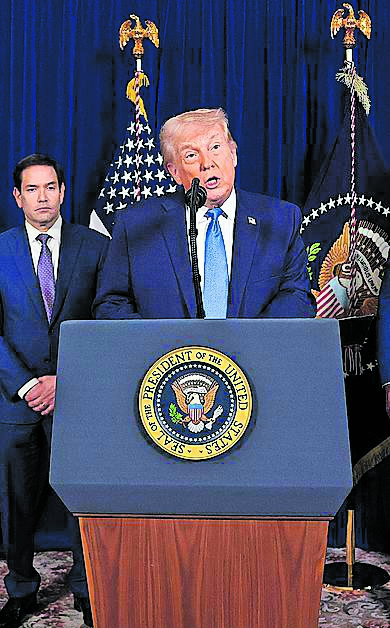
Within hours of snatching Maduro Donald Trump faced reporters 

Ten minutes after the capture of Nicolás Maduro was announced on social media, the White House correspondent of the New York Times wanted words from the administration for his paper’s rolling news coverage. Fortunately, he knew just who to call.

He dialled the president of the United States. Donald Trump answered after only three rings and gave him an interview on the spot. It was 4.30 in the morning.

A few hours later the president, looking slightly worse for wear, held a press conference and told a startled collection of correspondents gathered at his Palm Beach social club that he now intended to “run Venezuela”. There were no answers on how he intended to do this or even how he intended to be in a position to do it. He did not know how long he was going to do it for, or even how he would know it was time to stop doing it.

It wasn’t obvious that he or anyone else had given thought to any of those problems. Neither at 4.30 in the morning nor later that day did he provide any details. Nor was there any discussion of the legal position, internationally or domestically. By the way, given that Maduro is being charged with a number of offences, and tried by independent courts, it would be interesting to know what happens if he isn’t found guilty. But there was silence on that too.

Answers to some or maybe all of these questions will doubtless emerge. But as a way of conducting government it was, to say the least, unconventional. And it’s hard not to foresee trouble ahead as a result.

So there is all that. But there is also something else. Maduro has been a catastrophe for the people of Venezuela. He has been a nightmare for his country’s neighbours. He cheated in the election, losing despite all of his repression. And he isn’t legitimate in any way. Yet there he was. For years and years, there he still was. And now he no longer is, because Trump has removed him.

The US president didn’t spend years considering all the reasons not to act, he didn’t consult all the stakeholders who might have told him it was too risky, he didn’t get bogged down in legal arguments. He just went ahead. And then, when it was done, he put it out on social media and picked up the phone and answered questions about it at 4.30am. It is a perfect example of the big tension in modern politics — progress versus process.

People want progress on immigration. What they get is process 

In his 2025 book Breakneck, Dan Wang contrasts China and the United States. He calls the former an engineering state and the latter a lawyerly society. With China “building big at breakneck speed” and America’s system “blocking everything it can, good and bad”.

Wang shows how the leadership of China is dominated by engineers and has been since the early 1980s. And he provides the extraordinary fact that between 1976 and 2020 every single nominee of the Democratic Party for president and vicepresident of the US had been to law school. And that was still true of their presidential nominee in 2024.

Much of Breakneck is an account of vast tunnels and bridges and roads being constructed by the engineering state, of huge buildings being erected in weeks, of power stations and factories and parks all appearing within months of being conceived.

Meanwhile the lawyerly society plods along, holding committee hearings and judicial reviews.

His target in the book is America, but in an end-of-year letter, reflecting on how his ideas had been received, Wang had Britain in his sights.

“Every problem in the lawyerly society is worse in the UK. I thought that California’s high-speed rail project was an embarrassment; then I learnt about the Leeds tram network. First legislated in 1993, mass transit might not come to West Yorkshire until the late 2030s.”

Donald Trump acts as he does partly because he can’t help himself.

He is impulsive and he doesn’t care to wade through a lot of papers or pay attention through lengthy briefings. He thinks he’s a better press officer for himself than anyone else and he likes answering his phone. So subverting the usual way of things is partly personal preference.

But it is also partly political calculation. Voters want better outcomes. They want things to happen. They are either uninterested in process or actively hostile to it.

They just want someone to get on with it. Pollsters in Britain find that while voters may not like Trump, may even be actively hostile to him, he is a model of what real change looks like. He acts.

Wang’s British example was a tramway but he might just as easily have mentioned immigration. People want progress on controlling immigration and what they get is process. They want someone who is here illegally to be removed expeditiously. The don’t want foreign criminals to stay here for reasons that elude understanding. Politicians are articulate at explaining why various sorts of law mean they can’t do things people think are mere common sense.

It was telling that when the Tories were accused of granting citizenship to the Egyptian dissident Alaa Abd el-Fattah, they hadn’t really done so.

He had gained it automatically due to laws they weren’t in control of. It was also telling, and right, that this defence of their actions did no good at all to anyone who mounted it.

People don’t want a process answer.

Yet not all the arguments between progress and process favour the former over the latter, by any means.

It’s a tension not a choice. Wang shows that China erects buildings that fall down too easily, that its bridges often go nowhere, that it amasses huge debts making economically questionable investments. Quite apart from the impact on individual rights.

In Britain, impatience with public procurement was well founded and obtaining PPE became an emergency during the Covid lockdown. But it can’t be said that entirely overturning process had altogether satisfactory outcomes.

The same will prove true with Trump’s Venezuelan adventure.

Acting without allies, or a careful plan for the aftermath, is incredibly risky and abandoning any sort of consideration of international law will prove short sighted. And one day the president will bring disaster upon himself and everyone else by answering the phone to whoever happens to call him at 4.30 in the morning.

Advanced liberal democracies risk become less advanced, less liberal and less democratic because they can’t get things done. They make a fetish of process and can’t progress. But being wholly cavalier about process and institutions won’t work either.

We can’t do without progress and we can’t do without process. The world is in desperate need of statesmen able to find a middle path. 

Saturday, January 3, 2026

DT26002 The Benefits of Culture. V01 030126

 Does a dose of art really make you feel young?

A scientist reveals the health benefits of culture — shame her book is so colourless and banal. 

By John Maier

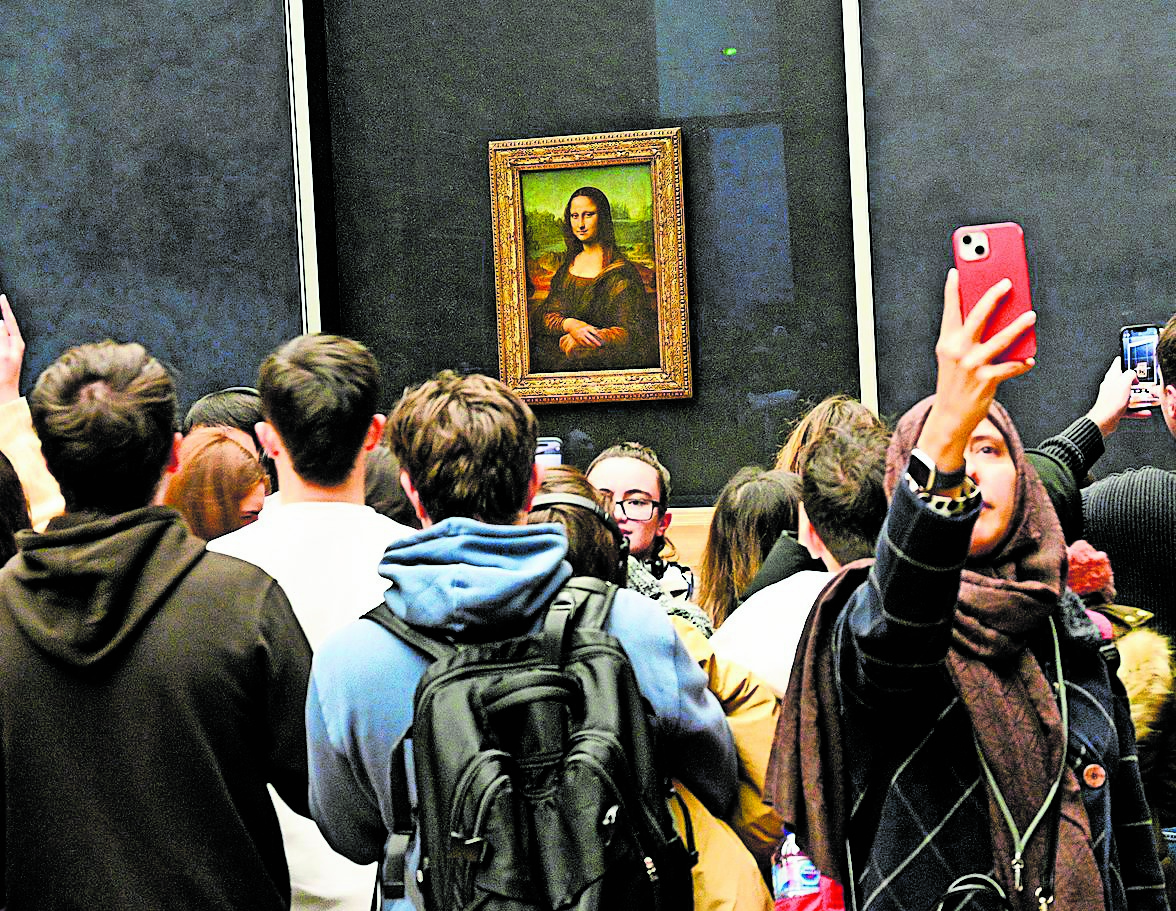
Visitors to the Louvre “engaging” with the Mona Lisa

Art Cure 
The Science of How the Arts Transform Our Health 
by Daisy Fancourt

Cornerstone £22 pp352

What good are the arts? To point merely to the enjoyment they give rise to strikes many as frivolous. To mention beauty risks something worse — close to a confession of preciousness on the part of the speaker. To argue that art, like other disciplines, promotes knowledge has always been challenging because so much artistic creation is fictional, like novels, or largely non-representational, such as classical music.

Some have argued optimistically that the arts may have an ennobling effect on their audience, but pursue that argument and, according to Godwin’s law, it won’t be long before someone mentions one particularly well-known 20th-century Austrian water-colourist and you will be back at square one.

Daisy Fancourt, an epidemiologist at University College London, says the arts will make you better. Not a better person, mind you. Rather, bringing the utilitarian justification of the arts up to date with the hypochondria and health-consciousness of the modern age, Fancourt argues that the arts will make you feel better. Art Cure is “a journey through the astonishing scientific evidence for how arts can … stave off illness and disease and help you live a longer and fuller life”, she says. Do you have enough art “ingredients” in your cultural “meal plan”? In defending her view, Fancourt’s strategy seems to be to overwhelm the reader with evidence. After a while the effect is quite unrelenting. “There is no physiological system that art does not affect,” she says ominously. Notice, though, how Fancourt helps herself to the World Health Organisation’s maximally inclusive definition of health: “a state of complete physical,mental and social wellbeing”. Probably sensibly she does not try to resolve the contentious question of what counts as art, or what counts as engaging with it.

That means, for the various and shifting purposes of her book, everything counts: singing, origami, doodling, going to hip-hop gigs, graffitiing, listening to ambient music — even, she seems frighteningly to suggest at one point, watching the TV series Gilmore Girls.

Those parameters may seem benignly inclusive, but they risk trivialising Fancourt’s thesis, making it no more interesting than the claim that engaging in any passably intelligent activity can be shown to be good for you in some way. Well, duh.

Still, a lot of the evidence she presents is notable and relevant. “Engaging” with “art” has been shown to lower levels of cortisol (a stress hormone), decrease rates of dementia and mental illness, boost the immune system and lower the body’s inflammatory markers. Some effects are fairly immediate. “If adults over 60 without previous musical training are given music lessons … within a few months they show improvements in their cognitive flexibility and processing speed,” she says.

Other effects are gradual and cumulative. Professional musicians have “a larger volume of grey matter in several areas of the brain, including motor, auditory and visuo-spatial regions”. Fancourt argues that “adults over the age of 50 who regularly go to museums, live music events, galleries, exhibitions, the theatre or the cinema are physiologically around four years younger than those who never engage”.Other data slots in more randomly.

Did you know that pre-teens who read for pleasure are more likely to consume fruit at the onset of adolescence? Or that Transport for London found that assaults on staff decreased by 25 per cent when classical music was piped into stations? Fancourt plays down the obvious possibility that other factors may explain the effects.

Still, by now even the slowest of readers has got the gist: whenever an artistic intervention is studied and reported on, the results will prove pleasantly astonishing and positive. Why, then, aren’t the arts funded as an urgent matter of public health? The decline in dementia rates alone, Fancourt suggests, would be worth £1.5 billion a year to the NHS. And what about kids? Getting them to adopt Fancourt’s artistic “meal plan” could have positive “spillovers”, “helping them to avoid being underoccupied, which is often the first step towards unhealthy behaviour like underage drinking, smoking or becoming part of a gang”. Ah yes, artists — those famously non-smoking, nondrinking, rule-abiding figures.

But such a narrow argument has an unsettling effect. Fancourt’s one-eyed view of the terrain risks flattening the subject matter. Are the arts valuable because they can be used as an effective instrument of public health management? Even if it is true that they can be, to lay so much emphasis on this seems curiously to miss the point; like making a utilitarian case for the advantages of loving your children.

What kind of person, one finds oneself wondering, would be motivated to develop an interest in art after reading Fancourt’s book? A reluctant graffiti artist worried about his cortisol levels? A post-operative convalescent who, having finished off the last of the painkillers, desperately turns to the sedative labelled “Gilmore Girls”? Fancourt’s homespun and often shockingly insipid reflections do little to assuage the reader’s concerns. We are warned not to “feel pressure to try anything too ‘highbrow’”. When choosing our “daily dose”, we are advised blandly to “find an activity that resonates with you and your sense of self”. If you want “immediate relaxation”, opt for “calm tempos, low volumes”. If you sufferfrom stress, why not keep “a little ball of Plasticine in your desk drawer so you can try to mould your stress into a figure”? Art that addresses challenging themes like death or suicide must “walk a careful tightrope” because it can be “harmful”. Why not hang “a calming picture next to your desk that you can take 60 seconds to gaze at”?

Everything counts: singing, origami, doodling, hip-hop gigs and graffiti

In keeping with the convention of much popular non-fiction, Fancourt’s book is peppered with random gobbets and unmemorable character-led anecdotes, all of which breathlessly illustrate the barely credible degree to which amateur art engagement can transform lives. Of a lawyer who becomes a part-time songwriter, we learn “she felt a profound, euphoric happiness — all her stresses washed away and replaced by a spine-tingling feeling of wonder”. Hooray for her.

Some people may find Art Cure inspiring, its message important and its praises worth singing. It is certainly relentlessly well-meaning. In its uniform banality and colourlessness it, ironically, fails to embody any of the qualities of surprise or subtlety characteristic of good art. For my part, I often wanted to scream at the unfairness of being made to read it. Not, when you think about it, a healthy outcome.

Thursday, January 1, 2026

DT26001 Sad Death of a young Kennedy. V01 010126

 Tatiana Schlossberg

Environmental writer and granddaughter of John F Kennedy whose rare cancer diagnosis was yet another family tragedy
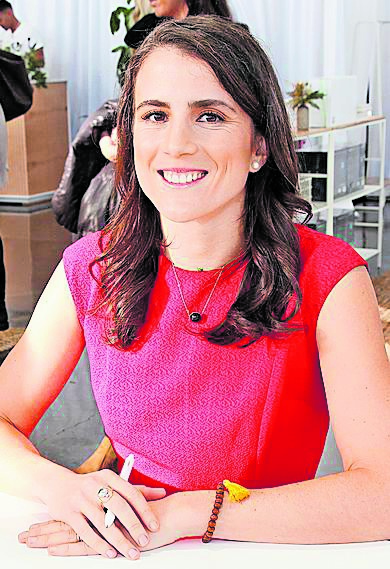
Schlossberg at a book signing

On May 25, 2024, Tatiana Schlossberg, the 34-year-old granddaughter of John F Kennedy, entered the Columbia- Presbyterian hospital in New York to give birth to her second child. It was far from the joyous occasion that she and her family had anticipated.

The baby girl, named May, was born at 7.05am. A few hours later, Schlossberg’s doctors noticed that she had an abnormal blood count. Their initial hopes that it was something to do with the pregnancy were dashed when she was diagnosed with a rare mutation of acute myeloid leukaemia.

“I did not — could not — believe that they were talking about me,” Schlossberg, an environmental journalist, recalled in a moving article that she wrote for The New Yorker magazine 18 months later, in which she announced that she was dying.

“I had swum a mile in the pool the day before, nine months pregnant. I wasn’t sick. I didn’t feel sick. I was actually one of the healthiest people I knew. I regularly ran five to ten miles in Central Park. I once swam three miles across the Hudson — eerily, to raise money for the Leukemia & Lymphoma Society.”

Schlossberg’s mother was Caroline Kennedy, the former US ambassador to Australia and Japan whose father — America’s 35th president — had been assassinated in 1963. Her mother’s uncle, Robert F Kennedy, had also been assassinated while he was running for president in 1968. Her brother, John Kennedy Jr, had been killed with his wife, Carolyn, in a plane crash in 1999.

The ill fortune of the Kennedys had struck the family again, and Schlossberg was acutely aware of that. “For my whole life, I have tried to be good, to be a good student and a good sister and a good daughter, and to protect my mother,” she wrote. “Now I have added a new tragedy to her life, to our family’s life, and there’s nothing I can do to stop it.”

Tatiana Celia Kennedy Schlossberg was born in New York in 1990, the daughter of Caroline and Edwin Schlossberg, an artist and designer. Her mother was Roman Catholic, her father Jewish. She was raised in the Upper East Side of Manhattan, a few blocks from her grandmother, Jacqueline Kennedy Onassis, who died of non-Hodgkin’s lymphoma when she was four. She was educated at the private Brearley and Trinity schools in New York before earning a history degree at Yale where she edited the Yale Herald. She then studied for a master’s degree in American history at Oxford University.

While in the UK she attended a wreath-laying ceremony at the memorial to her grandfather in Runnymede, Surrey. “We have come here today to honour his memory — as this monument does so well — but today is a difficult day because it is a reminder of a moment of profound sadness for my family, for America and for the world,” she said.

Back in the US she trained as a journalist — first at the local paper on Martha’s Vineyard, not far from the Kennedy family’s compound at Hyannis Port, Massachusetts, and then at The Record in Bergen County, New Jersey, just north of New York City. “I covered everything from doughnut wars and stolen puppies to lives changed by gun violence and Hurricane Sandy,” she recalled.

She was taken on as a reporter on The New York Times’s metro section in 2014 and that year wrote a story about the discovery of a dead bear cub in Central Park. A decade later her cousin, Robert F Kennedy Jr, son of the assassinated former attorney-general Robert F Kennedy, was running for president. He admitted that he had collected the cub after it was hit by a car and dumped it in the park. “I had no idea who was responsible for this when I wrote the story,” Schlossberg said.

She went on to become a science and climate reporter before leaving The New York Times in 2017. That same year she married George Moran, a doctor she had met at Yale, and five years after that their first child, Edwin, was born.

Schlossberg worked as a freelance journalist, writing about environmental issues. She generally kept a low profile and avoided social media. In 2019 she published her first book, Inconspicuous Consumption: The Environmental Impact You Don’t Know You Have, which explored the unseen environmental costs of the internet, technology, food, fashion and fuel. She also launched a newsletter, News from a Changing Planet. Of her own lifestyle, she said: “I make a much bigger effort to go to the farmers’ market. I don’t ever take a plastic produce bag at the grocery store. I really like to keep the clothes I have and wear them out. I offset my travel when I fly.”

Then, in May 2024, when her life seemed so full of promise, she received her devastating diagnosis.

Schlossberg spent the next 19 months battling the disease. She endured many months of chemotherapy, bone marrow transplants and experimental immunotherapy, spending long periods in Columbia-Presbyterian and Memorial Sloan Kettering hospitals. She had remissions and relapses, but nothing could beat the cancer.

President Trump’s appointment of Robert F Kennedy Jr, an antivaxxer and conspiracy theorist, as health secretary compounded her anguish.

“I watched from my hospital bed as Bobby, in the face of logic and common sense, was confirmed for the position, despite never having worked in medicine, public health or the government,” she wrote in the New Yorker article, which was entitled “A Battle with My Blood” and published on the 62nd anniversary of President Kennedy’s assassination.

“As I spent more and more of my life under the care of doctors, nurses and researchers striving to improve the lives of others, I watched as Bobby cut nearly half a billion dollars for research into mRNA vaccines, technology that could be used against certain cancers; slashed billions in funding from the National Institutes of Health, the world’s largest sponsor of medical research; and threatened to oust the panel of medical experts charged with recommending preventative cancer screenings,” she wrote.

Kennedy was “an embarrassment to me and the rest of my immediate family”.

Of her own condition, she wrote: “I feel so cheated and so sad that I don’t get to keep living the wonderful life I had.”

Tatiana Schlossberg, environmental writer and granddaughter of John F Kennedy, was born on May 5, 1990. She died of acute myeloid leukaemia on December 30, 2025, aged 35