New terminology to me but a Jira ticket (or issue) represents a single unit of work — a task, a bug, a feature request, or a support request — that someone on a support team needs to handle.
This is a reminder of how a software problem can directly impact you safety when flying. To the credit of the aviation industry lead by the UK Civil Aviation Authority a near miss accident has resulted in positive action by Airbus to fix the problem with an urgent software update. Having your journey disrupted is nothing compared with dying in an aircraft accident. These things need to be communicated by the media as positives and not negatives. Software will always have bugs and it’s the way you deal with them that matters. All credit to those involved. But I am confused by the mention of “intense solar radiation” in the diagnosis of this problem since it seems more than a normal bug but more to do with “parity” like checks on streams of bits that control the aircraft that is not so effective in the latest software version. It’s a concern that such a fundamental layer of control appears to have been compromised in the latest version. I have great faith in Airbus, more than in Boeing, since they have been digital so long but I am surprised they have made such what appears to be such a fundamental safety error. Aircraft constantly depend up digital messaging with the need for message validity checks critical. Be it using “check sums” or “parallel systems” to valid messages. I suspect this problem is going to create a whole new focus with the prospect of solar activity corrupting these message streams now requiring a more robust digital system design.
The problem
On 30 October, @jetblue flight 1230, an Airbus A320 operating from Cancún to Newark, experienced an unexpected pitch-down event that prompted an emergency diversion to Tampa.
According to preliminary findings, the aircraft’s ELAC 2 (Elevator Aileron Computer), built by Thales and responsible for managing pitch and roll, malfunctioned mid-flight.
@airbus advised that intense solar radiation may corrupt data critical for flight-control systems, potentially leading to an “uncommanded and limited pitch-down event” even with the autopilot still engaged. EASA issued an Emergency Airworthiness Directive for Airbus A320 family aircraft elevator aileron computers (ELAC).
Airbus teams are now working around the clock to support operators and deploy the required software fix across affected A320 aircraft. Numerous airlines stated they will fully comply with the directive and expect resulting operational impact to be minimal.
Solar Radiation
So why does “intense solar radiation” figure in the Airbus software problem. Because radiation can under certain rare but real conditions corrupt the data the plane’s computers.
Here’s how that works and why it matters now.
☀️ What does “solar radiation” mean here
• “Solar radiation” doesn’t just mean ordinary sunlight. In this case it refers to high-energy particles — e.g. from a strong solar flare or cosmic ray shower — hitting the Earth’s atmosphere.
• Aircraft at cruising altitude are more exposed: the thinner air absorbs less of that radiation, so “cosmic-ray flux” (or radiation from solar activity) is higher up there.
Radiation of this kind can penetrate sensitive electronics — especially when the systems are not hardened against radiation. In semiconductor chips, a single high-energy particle striking a memory cell or logic circuit can flip bits — from 0 → 1 or 1 → 0 — or cause other transient “glitches.”
🛩️ How that affects aircraft software / flight-control computers
• The affected computer in this case is a flight-control computer module: the “Elevator and Aileron Computer” (ELAC) that controls pitch / roll surfaces (elevators, ailerons) on A320-family jets.
• If radiation causes a “bit-flip” (a “soft error” in computing terms), critical data used by flight-control software could be corrupted — for example, commands or sensor inputs might be misread.
• That could result in erroneous or uncommanded control inputs. Indeed, the recent incident that triggered the software alert involved a sudden, unexpected pitch-down (i.e. nose drop) during cruise in a Airbus A320 — behaviour inconsistent with pilot commands.
So essentially, the vulnerability is: under exposure to intense solar radiation (or cosmic-ray flux at high altitude), the flight-control computer’s data could be corrupted, and that corruption might trigger faulty flight control commands.
✅ What’s being done (i.e. the “fix”)
• Airbus has identified that with the affected software version (the L104 software load on ELAC units), this radiation vulnerability exists.
• Regulators (like European Union Aviation Safety Agency — EASA) have issued emergency directives ordering operators of A320-family aircraft to revert to the previous, safer software version (or apply a modified version) before further flights.
• For many aircraft the software revert can be done in a couple of hours.
• For some older aircraft, more extensive hardware changes may be needed.
🔎 Why this is such a big deal now
• Because the affected jets are widely used: around 6,000 A320-family aircraft globally are impacted — roughly half the global A320 fleet.
• That means many airlines need to ground jets to quickly roll back the software or apply the fix — causing operational disruption.
• It also highlights a more general, worrying risk in modern aviation: as avionics rely more and more on digital electronics, even rare external environmental events (solar flares / cosmic rays) can produce “soft errors” with real-world safety implications.
If you like — I can pull up and summarise a timeline of what happened: from the first incident, to discovery, to the software fix and grounding list.
Why is the previous version of the software better than the current ?
In short: the previous software version is safer because the newer version accidentally removed or weakened a protection mechanism that handled radiation-induced data errors.
Here’s the clearer explanation:
✅ Why the older Airbus ELAC software is safer
1. The earlier ELAC software had more robust fault-handling
The older ELAC load included logic that contained unexpected data values — for example:
• internal cross-checks between processors
• sanity-checks on computed flight-control parameters
• fallback behavior if a variable suddenly becomes invalid
These protections were designed to catch bit-flips caused by cosmic rays or solar radiation.
2. The newer software introduced a change that created a “gap”
The update (the L104 software) changed how certain control parameters were:
• stored
• validated
• or transferred between redundant channels
That change accidentally created a pathway where a radiation-induced bit error could:
• pass through the system undetected
• be interpreted as a valid command
• drive an unexpected elevator or stabilizer input
In other words: a corrupted value could slip through, whereas in the old version it would have been rejected or replaced by a fallback value.
3. The previous version is known-good and “radiation-tested” from years of use
The earlier ELAC software:
• had millions of flight-hours
• already proven its resilience to high-altitude cosmic radiation
• had a conservative validation philosophy (typical in older avionics software)
The new version did not yet have the same operational exposure, and a subtle design change introduced the vulnerability that only became visible after a real event.
4. Rolling back immediately removes the exposure
By reverting to the older version, regulators guarantee that:
• the known failure pathway is closed
• the computers behave in the way they did during many years without similar events
Hence, immediate rollback is much safer than leaving the fleet on a newer, untested, and now known-vulnerable load.
⭐ In one sentence
The old version is safer simply because it had stronger error-checking that prevented solar-radiation-induced data corruption from affecting flight controls — protections the new version unintentionally weakened.
If you’d like, I can explain what type of fault-checking was likely weakened (e.g., memory parity checks, range validation logic, task scheduling changes), or walk through a simplified example of how a cosmic-ray bit flip can confuse a flight-control computer.
Travellers face flight disruption from Airbus software glitch
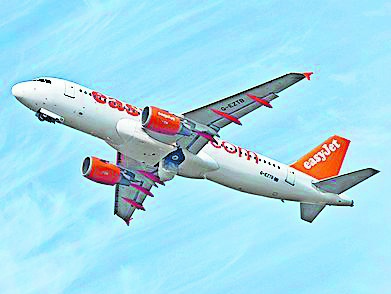
Airbus has ordered an immediate software change on a “significant number” of its A320 family of jets, which sources said could disrupt about 6,500 aircraft, including those operated by Britain’s biggest budget airline, easyJet.
The Civil Aviation Authority said that affected jets must have their software modified “or remain on the ground from Sunday onwards”.
EasyJet and Wizz Air have warned that weekend flights are likely to face delays and cancellations. American Airlines and Wizz Air said they had identified aircraft requiring the update.
The software change, announced yesterday, is likely to cause cancellations and delays during one of America’s busiest travel weekends of the year over Thanksgiving. A bulletin sent to airlines said that the update must be implemented before the next routine flight.
Airbus said that a recent incident involving intense solar radiation may have corrupted data critical to the flight control systems of the A320 family.
Industry sources said that about two thirds of affected planes would only need to be grounded for a few hours while the software was reverted to a previous iteration.
However, a shortage of maintenance capacity, combined with hundreds of Airbus jets already being grounded for unrelated inspections or repairs, has placed further pressure on airline engineering operations.
The remaining third of aircraft may also require hardware changes, which would cause longer delays.
The European Union Aviation Safety Agency (EASA) has issued an “emergency airworthiness directive”, effective from 11.59pm tonight, instructing operators to act.
Airbus’s concerns stem from an incident on October 30 when a JetBlue flight from Cancun, Mexico, to Newark, New Jersey, suddenly dropped, injuring at least 15 people.
The aircraft made an emergency landing in Tampa, Florida.
The EASA said that a preliminary technical assessment by Airbus had “identified a malfunction of the affected Elac [elevator aileron computer] as a possible contributing factor”.
The agency added: “This condition, if not corrected, could lead in the worst case to an uncommanded elevator movement that may result in exceeding the aircraft’s structural capability.”
The A320 is the world’s most widely used short-haul aircraft, overtaking the Boeing 737 in deliveries last month. In September the A320 family operated more than 1.4 million flights, with about eight million seats departing each day on its various models.
EasyJet is particularly exposed, with more than 350 A319, A320 and A321 aircraft in its fleet.
A spokesperson for the airline said: “As we are expecting this to result in some disruption, we will inform customers directly about any changes to our flying programme and will do all possible to minimise the impact. Safety is our highest priority, and easyJet operates its fleet in strict compliance with manufacturers’ guidelines.”
Wizz Air, which operates more than 200 A320 and A321 aircraft, said: “Wizz Air has already immediately scheduled the necessary maintenance to ensure full compliance.
“As a result, some flights over the weekend may be affected.”
The airline said passengers would be notified of changes and added: “The safety of our customers, crew and aircraft is always our overriding priority.
Update on Monday 1/12/25
Leading airlines including easyJet that were affected by a safety alert for Airbus’s A320 aircraft say they have now successfully dealt with the issue.
Airbus stunned the industry on Friday when it ordered immediate software updates to 6,000 aircraft, having concluded that “intense solar radiation may corrupt data critical to the functioning of flight controls”. The A320 is the most-delivered aircraft model and is operated by more than 350 airlines.
The announcement was one of the biggest safety alerts in Airbus’s 55-year history and came when 3,000 A320s were in the air. Investigations had been undertaken into an incident in late October when a flight from Mexico to the United States suffered a steep drop in altitude, injuring 15 passengers.
EasyJet was one of those most affected in Europe. A spokeswoman said yesterday that 239 of its 356 jets had needed the fix. It had “now completed the software updates on all of our operational aircraft which required them”. She said: “Our engineers worked round the clock to ensure our customers were able to get to their destinations and our flying programme continues to operate normally.”
American Airlines, which had hundreds of affected planes, also confirmed that “all work has now been completed”. In the US the issues were expected to cause particular disruption because of the high volumes of passengers travelling for the Thanksgiving weekend.
Diarmuid O’Conghaile, chief operations officer at Wizz Air, which had 83 operational aircraft requiring the upgrade, said its staff “worked tirelessly through the night to carry out the updates swiftly and efficiently”. There were no cancellations, he added.
Jet2 said: “In line with other operators of Airbus aircraft, we are installing software updates on a very small number of aircraft in our fleet. We can confirm there will be no impact to our flying programme as a result.”
British Airways is understood to have had only three aircraft affected and updated their software on Friday night.
Interesting post suggesting solar radiation just being used as a convenient excuse for a software bug.
🚨 Qantas hero pilot slams Airbus: is “solar radiation” just a convenient excuse? ✈️😳
Captain Kevin Sullivan, who commanded Qantas flight QF72 when an Airbus A330 violently pitched down twice in October 2008—injuring more than 100 people—is now openly questioning Airbus’s explanation for a strikingly similar incident on a JetBlue A320.
In the recent case, a JetBlue flight in the U.S. on October 30 experienced an uncommanded pitch-down linked to a malfunction in the elevator and aileron computer. The official explanation? “Solar radiation.” The event was serious enough to trigger the grounding of around 6,000 A320-family jets for a software fix.
Sullivan isn’t convinced.
> “I am sceptical. Is the cause of ‘solar radiation’ a smoke screen for a bigger issue? It is up to Airbus to answer that,” he said.
The European Union Aviation Safety Agency (EASA) issued an emergency airworthiness directive targeting aircraft that had received a specific software upgrade, from L103+ to L104. The directive warned that, if left uncorrected, the fault could cause an uncommanded elevator movement and potentially push the aircraft beyond its structural limits.
For Sullivan, the parallels with QF72 are hard to ignore—same manufacturer, fly-by-wire controls, sudden nose-down events driven by faulty computer logic. One key difference: after QF72, the A330 fleet was not grounded.
He argues these incidents expose the dark side of ultra-automated cockpits: planes that are “easier to fly but harder to save.”
According to Sullivan:
When automation misbehaves, pilots can be dumped into a “no man’s land” of abnormal behavior they were never trained to handle.
Increasing automation can bring unforeseen side effects, because complex systems “fail in complex ways.”
So while passengers see a smoother, more digital flight experience, the real question is unsettling: are we still in control of these aircraft—or are we trusting software we only think we understand? 🤔
The Fix
While headlines talk about thousands of Airbus A320 family jets needing an urgent software fix after a JetBlue flight suddenly dropped altitude in October, this is the quiet scene playing out in cockpits around the world. Engineers are plugging a bright yellow Portable Data Loader into the avionics panel and loading new software into the aircraft’s elevator and aileron computer (ELAC), the system that turns pilot inputs into movements of the wings and tail.
The work follows emergency orders from European and U.S. regulators after investigators found that intense solar radiation can corrupt ELAC data on some A320 family aircraft, triggering brief uncommanded pitch-down events like the one that injured passengers on JetBlue Flight 1230 from Cancun to Newark and forced an emergency landing in Tampa. Airbus and safety agencies say about 6,000 A320 family jets worldwide need either a software rollback or, on some aircraft, a hardware change before they return to normal service. Airlines report that each software job typically takes around two hours per plane, and in some cases longer when hardware must be swapped, which is why tech ops teams have been working through the night to get one aircraft after another cleared.

The Science
✨ Cosmic Radiation (SEU / Bit-Flip)
Space Travel Phenomena faced by Aviation.
At 35,000 ft, Aircraft Avionics experience radiation levels hundreds of times higher than on the ground.
This high-energy cosmic activity can cause a Single Event Upset (SEU) —
A moment where one particle hits a microprocessor and flips a digital bit:
0 → 1
1 → 0
This tiny change is called a bit-flip.
In modern fly-by-wire aircraft, a single flipped bit can momentarily affect data inside critical computers like ELAC, SEC, FMGC, or flight control processors.
Most systems detect and correct this instantly — but if software is sensitive, the event can trigger resets, messages, or unexpected behavior.
That’s why manufacturers monitor SEU-related events closely and issue updates such as AOTs, which may later become ADs.
It’s a reminder that aviation safety is so advanced, we even track particles from space to protect every flight. ✈️✨
The Concerns it’s a False Excuse for a software bug.
✈️ Experts Dismiss Theory That Solar Glare Is Behind >6000Airbus Issues
As questions continue to swirl around recent Airbus production and software concerns, some online speculation has suggested that “solar glare” or sun-related interference might be contributing to the problems.
Aviation experts, however, strongly reject that idea.
According to industry analysts and former airline captains, solar glare has no known impact on A320 or A330 fly-by-wire systems, avionics, or fuselage structures. Modern airliners are built with hardened, shielded electronics designed to withstand extreme conditions—far beyond ordinary sunlight exposure.
The real challenges facing Airbus stem from manufacturing quality issues, software logic concerns, and supplier-related pressures, not environmental glare.
Experts say blaming sunlight oversimplifies what are much deeper and more complex technical and industrial problems.
As investigations continue, specialists emphasize the need to focus on verifiable engineering causes, not misconceptions.
#AviationNews #Airbus #A320 #AviationSafety #AircraftManufacturing #AvGeek #Airlines #BreakingAviationNews