Tuesday, October 28, 2025

DT25024 Elitism and Social Media V01 281025

 Why elitism is key to democracy’s survival
It is unfashionable to favour a superior expert class yet its destruction has flooded our society with misinformation

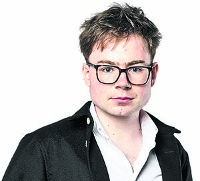
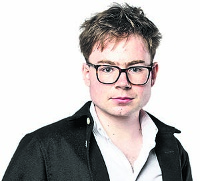
James Marriott @j_amesmarriott 

I am inclined by temperament towards the innocuous middle ground of most issues. So I was pleased to discover, on a panel discussion a couple of weeks ago, that I had embarked on an inadvertent brush with the glamour of contrarianism. Lauding the virtues of that much-despised institution the “mainstream media”, I noticed my remarks were being met with ... perhaps booing oversells the drama of the occasion. Let us call it a dark and audible murmur of dissent.

I should not have been surprised.

Few nowadays are sympathetic to the notion of a superior expert class.

Anti-elitism is the fashionable pose of our time, adopted almost as readily by desperate technocrats (Sir Keir Starmer is prone to the odd disapproving bleat about Westminster) as by populists.

Elitism is just a bad look: snobbish, anti-egalitarian, undemocratic. Every modern politician must find an establishment to fight (or pretend to fight): old boys’ clubs, woke cabals, civil service cronies.

But increasingly I’m persuaded that elitism is a profoundly democratic sentiment. It may be my most unfashionable opinion.

We’re all familiar with the popular notion that social media has “democratised” our discourse. The voiceless have been given a voice.

Experts have been dethroned.

Information and debate is no longer controlled by a self-interested and self-satisfied elite of journalists and academics. If you want to address the nation, you no longer have to get past that intimidating figure, the comment editor of The Times.

But as the political philosopher Dan Williams points out, a more democratised discourse can be radically anti-democratic in its effect.

Predominantly poorer, less-educated people are catching measles 

More people can speak, true. But the resulting proliferation of ignorant, wrathful and inexpert voices means that ordinary people are increasingly poorly informed. Brigitte Macron is a man. Barack Obama is a lizard. Such stuff would have puzzled even the Daily Sport in its Nineties heyday.

Online it’s rife. The result is that a smaller and smaller minority of people — almost invariably wealthier and better-educated newspaper readers — have access to reliable information about the way their country really works. Not so fair and democratic.

The American essayist Richard Hanania recently pointed out that before America’s experiment with Maga populism there was a gravely undemocratic mismatch between popular views on vaccines (as many as 25 per cent of Americans fear they cause autism) and elite views on vaccines (20 years ago, virtually no politicians were antivaxers). In the anti-elitist Trump era, politicians are much better aligned with popular views on the subject.

Technically, the situation is now more democratic: people’s opinions are better represented by their politicians. But in another, more important sense, it is less democratic.

More people (predominantly poorer, less-educated people) are catching measles. Meanwhile, the portion of the American population still plugged into elite discourse (again, mainly the educated and the wealthy) are less affected by antivax misinformation and therefore less likely to catch it.

The obvious problem with the democratisation of our discourse is that popularity is a poor test of ideas.

It was not that the old liberal elite was more intelligent or virtuous. But they were competing for prestige in a system that, for all its faults, ascribed social status to rationality as well as to mere name-recognition. If you wanted to run for parliament, host a BBC programme or be welcomed rather than snubbed at a north London dinner party, it helped to be popular. But you were also strongly motivated to subscribe to a tolerant and sane “elite” world view.

It’s remarkable how quickly people drift off into the irrational when their careers no longer depend on elite approval. The former BBC presenter Neil Oliver now inveighs against vaccines and “one-world government”. A thriving online fandom means he no longer needs to impress TV commissioners to get another series of Coast. We’ll miss the old elite when it’s gone.

On free speech, it may turn out we needed an elite to impose it 

If I had really wanted to annoy my audience the other weekend — to turn the mutterings into hisses — I could have suggested that democracy as we know it is a kind of elite ideology, at least partly the creation of 19th-century bourgeois liberals.

Even now, a century after the franchise was extended to the entire adult population, democratic government is not a universally popular idea. A recent survey infamously discovered that about a quarter of the population favours “a strong leader who doesn’t have to bother with parliament and elections”.

Support for democracy is stronger among old-fashioned political and media elites than on “democratised” social media. Anti-democratic “thinkers” such as the preposterous Curtis Yarvin (who argues that America should be ruled by an absolutist monarch) would never have got within a mile of the op-ed pages of an old-fashioned newspaper.

Online, he’s a celebrity.

And even if only a minority of internet users are actively enthused about autocracy, many more of them fail to respect the virtues of tolerance, respect and free speech that were once considered fundamental to democratic discourse. It may turn out that liberal principles like respecting an enemy’s right to speech are fundamentally counterintuitive to most people and that we needed an elite to impose them.

None of this, of course, is to say elitism is remotely a perfect principle.

Only that it’s becoming obvious that it’s preferable to anarchy. Elites are callous, self-serving and snobbish.

They are prone to the stupidity and errors of groupthink. Perhaps we need to paraphrase Churchill and call elitism the worst possible idea except for all the others. Not an inspiring argument. But I believe it. Don’t boo.


Monday, October 27, 2025

DT25023 The UK relationship with China V01 271025

 China problem can’t be solved by crude labels

Foreign policy requires strategy and nuance rather than branding People’s Republic an enemy

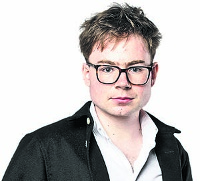
Cindy Yu @CINDYXIAODANYU

Cindy Yu

Is China friend or foe? That’s the question I was asked on the radio recently in light of the dropped case against two men accused of spying for Beijing. It’s a pleasingly simple framing, perfect for a talk show. But I couldn’t help feeling that such simplicity would be a very bad way to make foreign policy.

The debate over whether the UK should label China an “enemy” or a “threat” has reignited with fury after the collapsed trial of Christopher Cash and Christopher Berry. The anger is understandable. If the CPS is right and the case was dropped because of the government’s equivocal language on China, two potential spies will have been let off on a technicality of the nowredundant Official Secrets Act.

But that doesn’t mean the UK should now formally change its designation of China from a “challenge” to a “threat”. The world is more complicated than mere friends and foes, and no country embodies our sophisticated interconnections more than China, a gargantuan socialist-capitalist chimera. There is a reason that governments across the West have refrained from putting blunt labels on it, and that includes the United States.

I don’t deny the threats that Beijing poses to the UK and the western-led world order. If anything, we need to talk about them more and deal with them better. Much of China’s earlier economic growth was based on reverse-engineering western technology, often facilitated through theft. Cyberattacks continue to target British institutions, the Electoral Commission and British parliamentarians among recent targets. China’s economic gravity has pulled British critical infrastructure into its orbit, from telecoms to nuclear and steel. Ministers and the security services should absolutely continue to raise awareness of these threats.

All this under an often belligerent Chinese Communist Party (CCP) , led by a latter-day Chairman Mao.

Britain must reduce its need for Chinese trade and investment 

Under Xi Jinping, China has systematically oppressed its minorities, from the Uighurs to pro-democracy protesters. Its looming threat over self-governing Taiwan risks throwing world supply chains, especially in critical semiconductors, into chaos and would further check American power in the region.

But that’s only one side of the ledger. Today’s China is the product of four decades of globalisation on an unprecedented scale. It is not the Soviet Union of the last century, which tried to spread communism across the world and threatened nuclear armageddon. The CCP prioritises regime stability at home above all, followed closely by economic growth and technological advance. It is now a major trading partner for almost all of the world and the fourth-largest for the UK.

The two economies have been remarkably complementary. Imports from China have helped to keep life affordable and raise living standards in the UK, even as wages stagnated after 2008. The well-trodden narrative of job losses is more an American and German experience, Britain having delegated shipbuilding to South Korea and steelmaking to Europe long before China came on the scene. Since the UK’s shift to selling services, the Chinese middle class have poured hundreds of billions of pounds into British universities, law firms and the City.

So China presents both threat and opportunity. It is not schizophrenic or weak to recognise that the world’s second-largest economy, a country full of contradictions itself, home to almost a fifth of humanity, rubs up against the UK in myriad ways, both positive and negative. And as we move into a post-globalisation era, where China’s economic and technological power grow to challenge the western-led world order, a good China policy will try to limit the bad while maximising the good.

The UK must delineate its red lines, protecting the very core interests that China can never access (such as ownership of critical infrastructure). If the proposed London embassy really presents a security threat that can’t be mitigated, it must be rejected. Chinese students are welcome but there must be zero tolerance for intellectual property theft. Suspected spies must never be let off on a technicality.

Yet while keeping China out, there also needs to be more recognition of how to get our own house in order so as to reduce our need for Chinese trade and investment. Why can we no longer build railways or fix bridges? Why are our energy prices so high? How can British innovations scale into world-leading companies instead of being lost to Silicon Valley?

In this quest for more economic leverage, Britain needs to bolster its partnerships and supply chains with other countries. But none of that will happen overnight, and Chinese trade can still benefit the UK in the meantime, or bankroll necessary reforms. Crucially, all of this recalibration can be done without first shouting “China is a threat!”, as bracing as that might feel.

Australia is having some success at speaking softly and carrying a big stick. Under its prime minister, Anthony Albanese, the rhetoric with China has warmed so much that the red carpet was literally rolled out for him on a visit to Beijing this year. Yet he has just signed a rare earths deal with the US to diversify that critical supply chain from Chinese control and is working hard to Trump-proof Aukus, the Indo-Pacific submarine deal.

So let’s not mistake fierce rhetoric for successful foreign policy. In today’s unprecedentedly complicated world, dealing with China requires more strategy, more nuance. The People’s Republic is not a friend but that doesn’t make it an enemy either. You might say that it’s an epoch-defining challenge.

Tuesday, October 21, 2025

DT25022 Smartphone becoming like TV. V01 211025


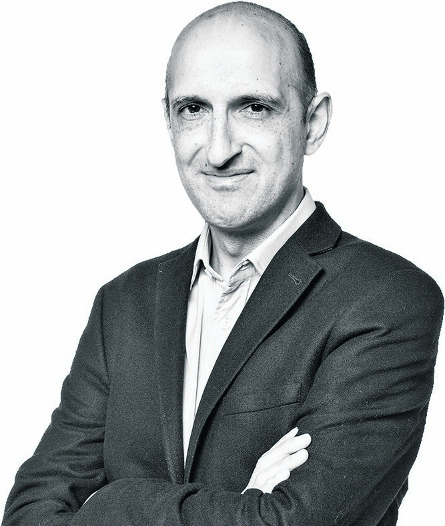
James Marriott

The work of the American novelist David Foster Wallace is littered with little prophecies. In a 2003 interview Foster Wallace described a new problem he had encountered watching television. He couldn’t stop. “I’ve become convinced,” he explained, “that there’s something really good on another channel and that I’m missing it. And so instead of watching, I’m scanning anxiously back and forth for this thing that I want but I don’t know what it is.”

“Infinite scroll” is the term now used for the technology behind never-ending social media timelines that endlessly refresh whenever you bump up against the bottom of the page. The idea is to produce compulsive behaviours in users who keep on scrolling in a state of permanent anticipation. Perhaps one more swipe will yield the animal video or conspiracy theory capable of wringing another drop of dopamine from an overtaxed brain.

This innovation — perhaps the key weapon in big tech’s armoury of addictive technologies — is usually attributed to Facebook but Foster Wallace, in his beadily observant way, noticed something similar was happening on multi-channel television more than two decades ago. You could infinitely scroll with a TV remote.

We are used to the idea of the smartphone as a dramatic worldaltering technology. But when the historians of the future look back on our time as the “screen age”, they may not mark its dawn with Apple’s 2007 iPhone launch. It’s possible they will see a continuous screen revolution beginning in the 1950s, when television first became widespread, and then accelerating through the late 20th century and into the present.

As the US journalist Derek Thompson points out, the smartphone — once hailed as the device that would connect the world — is turning out to be much more like television than we once thought. In a recent court case Mark Zuckerberg’s Facebook argued that it is not really a social media company because so little of the time its users spend on the platform is social. More than 80 per cent of time spent on Facebook and 90 per cent of time on Instagram is now spent watching videos.

Indeed, watching videos, it sometimes seems, is all anyone does online. YouTube shows videos.

Netflix shows videos. TikTok shows videos. So, increasingly, do Twitter and Reddit. Most big podcasts now broadcast video as well as audio.

Most news organisations are (in the industry jargon) “pivoting to video”.

In Thompson’s phrase, nowadays “everything is television”. Where the internet was once interactive, it is becoming more passive and TV-like.

Surveys find that the numbers of people who say they use social media “to keep up with friends” or “to share my opinion” have fallen steeply over the past decade. Increasingly popular answers are “to follow celebrities” and “to fill spare time”.

In 1980 CNN became the first 24-hour news channel in the world

The once-fashionable idea that the internet would give everyone their Warholian 15 minutes of fame is looking less and less true. The old divide between celebrities (or “influencers”) and civilians is reasserting itself. A tiny minority of people are responsible for producing the vast majority of the most-viewed content.

Looking back, 1980 may seem as revolutionary a year as 2007. It was in 1980 that CNN became the world’s first 24-hour news channel.

Every human entertainment ever devised before then was of finite duration — even Wagner operas finish eventually. But henceforth it would be possible to be entertained permanently. This was the beginning of the slow replacement of reality by screentime. By the 1990s, Americans were spending four hours a day watching television.

It’s often noticed that the smartphone has shattered our information environment into a wilderness of decontextualised fragments (so you can scroll past footage of the Gaza war and a puppy doing backflips in the space of three disorientating seconds) but television got there first. As long ago as 1985, the media theorist Neil Postman charged TV with a “Now ... this” mentality, referring to the phrase once used by news anchors to segue inanely from, say, news of a famine to a 30-second report about a cat stuck up a tree. “Now ... this” could be the motto of TikTok.

Similarly the TV critic James Poniewozik has drawn a parallel between Twitter and the chyrons which race along the bottom of news channels with their endless, urgent vomit of information both “terrifying” (“WHITE HOUSE EVACUATED ... FAA HAS SHUT DOWN ALL DOMESTIC FLIGHTS ...”) and “bathetic” (“IPHONE 4 IN SHORT SUPPLY FOR CHINA LAUNCH ... LINDSAY LOHAN COULD ENTER REHAB THIS WEEK”). And anyone who thinks addictive outrage is a purely algorithmic invention of the smartphone needs to watch old shows such as CNN’s Crossfire or Paxman-era Newsnight.

It’s no accident that many of the baleful social trends accelerated by the smartphone can also be traced to the pre-smartphone screen age.

Partisanship was already ratcheting up in America by the late 1990s when Newt Gingrich (a former star of Crossfire) led the campaign to impeach Bill Clinton. The decline of real-world socialising was noticed in surveys as long ago as the 1970s when people began to report they were spending their free time watching TV rather than going to church or knitting circles. Falling IQ may begin with the arrival of television, not the smartphone: a study of intelligence in Norwegian citizens found declines began in those born after 1975.

The smartphone is undeniably a revolutionary technology. It really has changed everything: from politics to culture to social life. But the strange paradox is that it is evolutionary too. Not just a rupture in history but the culmination of existing trends. The screen age has a deeper history than we remember.

Wednesday, October 15, 2025

DT25021 The power of story telling. V01 161025

  Turning Data into Decisions: The Power of Storytelling in Strategic HR Business Partnering. As HR Business Partners continue to evolve their skills, one capability is quietly becoming a differentiator: the ability to tell a compelling story with data.Every HR function today has dashboards, metrics, and insights. But it’s how we translate those insights into a clear, actionable narrative that determines whether we influence outcomes — or simply report information.

Data tells us what is happening.

Storytelling helps leaders understand why it matters, and what needs to happen next.


It’s the difference between saying: “Turnover is up 12% this quarter.” and saying:

“We’re losing our mid-level managers — the group that drives 70% of team performance. Without action, this could impact our customer experience scores by year-end.”

The most effective strategic HR business partners don’t overwhelm with text, numbers and PowerPoint slides — they connect the dots between people data, business performance, and strategic priorities. They create clarity and focus through narrative.

As our organisations become increasingly data-rich, our ability to communicate insight with purpose will define our impact.

Data informs but stories transform. 

Tuesday, October 14, 2025

DT25020 21st Century Life - Its the best so far. V01 141025


James Marriott

The Harvard psychologist Steven Pinker has observed that “Number of people in extreme poverty fell by 137,000 since yesterday” is a headline that could have run in every newspaper every day for the past 25 years. Pinker’s celebrated books Enlightenment Now and The Better Angels of Our Nature prosecute a rigorously data driven case that, for all the regular lamentations over imminent civilisational collapse, the human species has never been richer, safer, healthier, freer or longer-lived.

An encounter with Pinker, whom I interviewed for The Times a couple of weeks ago, should be mandatory for all habitual pessimists, although his hectic schedule (and our burgeoning numbers) could never allow it. His critics argue that some of his metrics are creaking (global poverty declines may be slowing and interstate conflicts rising) but it is hard to read his books fairly and deny that, for all the world’s recent travails, we are still living in what would have struck our ancestors as a golden age of unexampled prosperity.

To anyone familiar with premodern social history, that tragic, straggling death march of famine, toothache, fear and disease, no statistics are required to emphasise the superiority of life in 2025. Our tragedy is not that we are wallowing in one of the troughs of history’s line graph but nestling in the dip, imperceptible from the long perspective, after its most exuberant peak.

The problems of the 21st century are overwhelmingly the problems of success. We struggle with the chaotic superabundance of information; our ancestors were haunted by ignorance. We have to cope with the tragic consequences of humanity’s too-efficient exploitation of the planet’s resources. The notion of an obesity “epidemic” would have been laughable amid the diseases that stalked pre-modernity. Most of our ancestors were oppressed by a crushingly hierarchical and conformist social system, not by the infinity of individual freedom reckoned to be the fount of today’s “meaning crisis”.

Infinity of freedom is reckoned to be fount of a ‘meaning crisis’

There is an interpretation of Pinkerian optimism that wafts a hand at such “first world problems” and pronounces them negligible. For others, modernity is invariably selfsolving. The onward march of science crushes the doomsayers of yesteryear under the inexorable tread of progress. New York, we are reminded, was widely thought to be on the verge of drowning in horse manure a few years before the timely invention of the motor car. London smog was cured by central heating; obesity by Ozempic.

But you can believe in today’s golden age and also admit it introduces problems that are intimidating in their novelty. No previous human society has had to face up to the challenges of such formidable success. A civilisation that is as much of an economic and technological anomaly as ours searches history in vain for appropriate lessons.

For instance, ever greater personal freedom and ever greater technological progress have been the most reliable liberal cure-alls for struggling democracies since at least the mid-19th century. But how effective are those old elixirs in a world in which an excess of individualism appears to be driving a collapse of birthrates? Or in which Silicon Valley magnates seem intent on advancing artificial intelligence technologies to the point that they could destroy our species? Must we now oppose liberty and technology? History offers no clues.

Equally, no previous society has had to tackle the mood of decadent complacency that is arguably the most dangerous force in modern politics. Most European populations have eked out a living on the brink of a volcano — a single arbitrary crisis or governmental misstep away from war, rebellion or disease. A terrible but constant reminder of the preciousness of stability and moderation.

A mood of decadent complacency is the most dangerous force

The Enlightenment-era worship of reason and tolerance was a direct product of the bitter and bloody religious fanaticism of the 17th century. The giddy and reckless burn-it-all-to-the-ground mood that pervades today’s politics is a function of more than a half century of peace, prosperity and democratic government.

Indeed crises, according to a more controversial line of argument, can be positively stimulating. Nuclear proliferation has made full-blown interstate conflicts much rarer since the middle of the last century but, as a friend is fond of arguing, the long peace has also robbed modern countries of the most reliable spur to technological innovation and political reform. Few countries in history have had the opportunity to just... drift without ever hitting the rocks. Prosperous stagnation is a new problem.

Perhaps the most unforeseeable problem is that of heightened expectations. Human psychology is more sensitive to relative than absolute deprivation. The historian Peter Turchin has warned that threats to the continued prosperity of the middle class are about the most reliable catalysts for revolution in history. Hell hath no fury like the downwardly mobile. The richer a society becomes, the higher its citizens’ expectations. Nowadays, mere stability requires the maintenance of runaway success. That a generation could be the third or fourth luckiest in history and yet outraged to the point of revolt is remarkable but hardly a psychological mystery.

To acknowledge the problems of success is not to deny our luck. Rather it is to treasure at it all the more. History offers a sense of the extraordinary fragility of the sublime anomaly we call modernity. We can’t mess this up. We are so dauntingly lucky.

Sunday, October 12, 2025

DT25019 Need to advance the Muslim World V01 121025


Matthew Syed

A strange and unfamiliar feeling stirred as I sat down to write these words. A feeling that has been largely absent over recent years when writing this column. It rose up within me as I pondered the diplomatic breakthrough by Donald Trump — a stunning achievement, even with all the caveats about the risks and obstacles ahead — and the prospects for an entire region. Hope.

The opportunity for the Middle East is difficult to exaggerate, a region from which my paternal ancestors trace their heritage, back as far as the great Persian civilisation and its Islamic successor (my family tree is chronicled in a direct line to Muhammad, the documents lovingly preserved by my cousin Zafar). A region that could, with goodwill, leadership and the courage of its peoples, experience the blessings of the journey we call life rather than endemic hatred, bloodshed and conflict.

It is easy to forget that this region was once the intellectual hub of the world, a place that spawned the myriad breakthroughs of the Islamic Golden Age. I am not just talking about the great strides in algebra, astronomy and mathematics but the vibrancy of a region described by the philosopher Will Durant as “the torchbearer of civilisation”. The translation movement, rendering the wisdom of the ancient Greeks into Arabic, was hailed by the Yale classicist Dimitri Gutas as “equal in significance to the Italian Renaissance”. Ibn Khaldun, a 14th-century scholar, contrasted the enlightenment of the region with the “savagery” of Europe.

What, then, went wrong for the Muslim world? Why did it regress? One of the presiding iniquities of much western scholarship is the myth that all ills in the world can be traced to European colonialism, an untruth that serves as a sop to the developing world, the comforting delusion that the blame can be placed on outsiders and never on developments from within. The truth, of course, is that the degeneration of Islamic civilisation long predated colonialism and, in a certain sense, permitted it. I am talking about religion or, perhaps more accurately, that variant we call fundamentalism.

I guess I am not alone in wondering how different the Middle East might have been had it not been for the seismic influence of Al-Ghazali, that revered scholar of Sunni thought, who in the 12th century argued that science is not a liberator but a threat to the word of God and a danger to the clerics, who had every incentive to thwart the thirst for knowledge to maintain their power and privileges. “Innovator” was not regarded as a term of praise but, as the scholar Toby Huff has put it, “a term for a heretic and non-believer, subject to death”.

The historian Bernard Lewis notes in What Went Wrong? that as the influence of fundamentalist Islam percolated through the region during the later Middle Ages, “the relationship between Christendom and Islam in the sciences was reversed. Those who had been disciples now became teachers.” Sayyid Jamal al-Din al-Afghani, a 19th-century intellectual, wrote that Arab civilisation, which had once “thrown such a live light on the world, suddenly became extinguished”.

To describe this as a catastrophe is an understatement. While universities such as those at Bologna, Pisa and Oxford were slowly freeing themselves from the grip of the church — notwithstanding the arrest of Galileo in the 17th century — Islamic power structures were imprisoning the human mind within the cage of revealed truth. As a Taliban leader put it recently: “Western education is a sin”, ramming his point home by explaining his view of rain. “We believe it is a creation of God rather than an evaporation caused by the sun that condenses and becomes rain.”

And this, I believe, hints at the true prize for the Middle East in this accord. Western leaders must stop beating around the bush. The problem in the region isn’t a lack of aid, investment or peace initiatives, all of which in a sense put the cart before the horse. The problem is fanaticism, a virus that will infect and ultimately kill whatever peace is proposed. Fanatics, you see, lack that most civilising of virtues: doubt. Seized by absolute truth, they are not merely justified in slaughtering infidels; they have a duty to do so. Look at those who most abhor this deal: yes, Hamas (a reluctant signatory), but also Hezbollah, the Houthis and, most of all, the cult known as the Islamic Republic of Iran, which has impoverished and repressed its own people.

'' Muslim majority nations have just one university in the top 200 of the world

I am no fan of Mohammed bin Salman (we should never forget his role in the gruesome murder of a journalist) but should we not at least acknowledge what Gulf regimes are up against? They are seeking to seed the notion in a younger generation that they might benefit by freeing themselves from the grip of the madrassas; that by embracing peace and trade with Israel they will experience prosperity and hope. That is why I support any Arab leader who takes on the Wahhabist fanatics — while always acknowledging the moral ambiguity and messiness of any transition.

But let us also note the religious zealots in Israel, who oppose this deal with similar swivel-eyed zeal. Look at Bezalel Smotrich, Itamar Ben-Gvir and their followers, who proclaim that the land between the river and the sea is “promised” to them by their own fictional deity in the sky; that settling the West Bank violently is divine will; that they are the chosen ones and the Arabs the hated Amalek. They, to me, are every bit as abhorrent as, say, the Taliban and perhaps even more dangerous. For these extremists (along with the rapidly growing ultra-Orthodox population) are threatening the very foundations of the one liberal miracle yet to unfold in the Middle East.

Yet let me finish back in the Islamic world. It may be politically incorrect these days, but it is important to note that the 57 Muslim majority nations have just one university in the top 200 of the world; that there are two billion followers of Islam but only four winners of a Nobel science prize. A report in Nature magazine in 2002 found only three scientific areas in which Islamic countries excelled: desalination, falconry and camel reproduction. Over the past three decades (despite huge investment by Gulf states), Muslimmajority nations published just 5 per cent of science papers while making up almost 15 per cent of the global population. In highly literate Iran, scientific progress occurs not because of the regime but despite it.

By citing these statistics, I am not seeking to demonise the people of Afghanistan, Yemen, Palestine and the like. On the contrary, they are as intelligent and capable as anyone else — indeed the best and brightest have often enriched western universities by escaping the intellectual bondage back home. I merely wish to underline the catastrophic influence of fundamentalist Islam. Where Christianity gradually (and, yes, reluctantly) adapted and moderated its theology in the light of scientific progress, Muslim majority nations typically sought to shut it down. This, more than anything else, captures the otherwise mystifying divergence in the trajectory of two civilisations.

And it’s why the most urgent task of a provisional council in Gaza (and any other governing authority in the Middle East) is to challenge what happens in schools and colleges, in madrassas and Islamic seminaries. For it is only by severing the transmission mechanisms of the virus we call fundamentalism, by thwarting the mass indoctrination that still unfolds in large swathes of the Islamic world, that these brilliant peoples can be freed from the historic trap into which they have fallen. This, ultimately, is where the launchpad of rational inquiry, scientific curiosity and economic progress is to be found. All else is fluff and window dressing.

Wednesday, October 8, 2025

DT25018 Hitlers Neighbour V01 081025


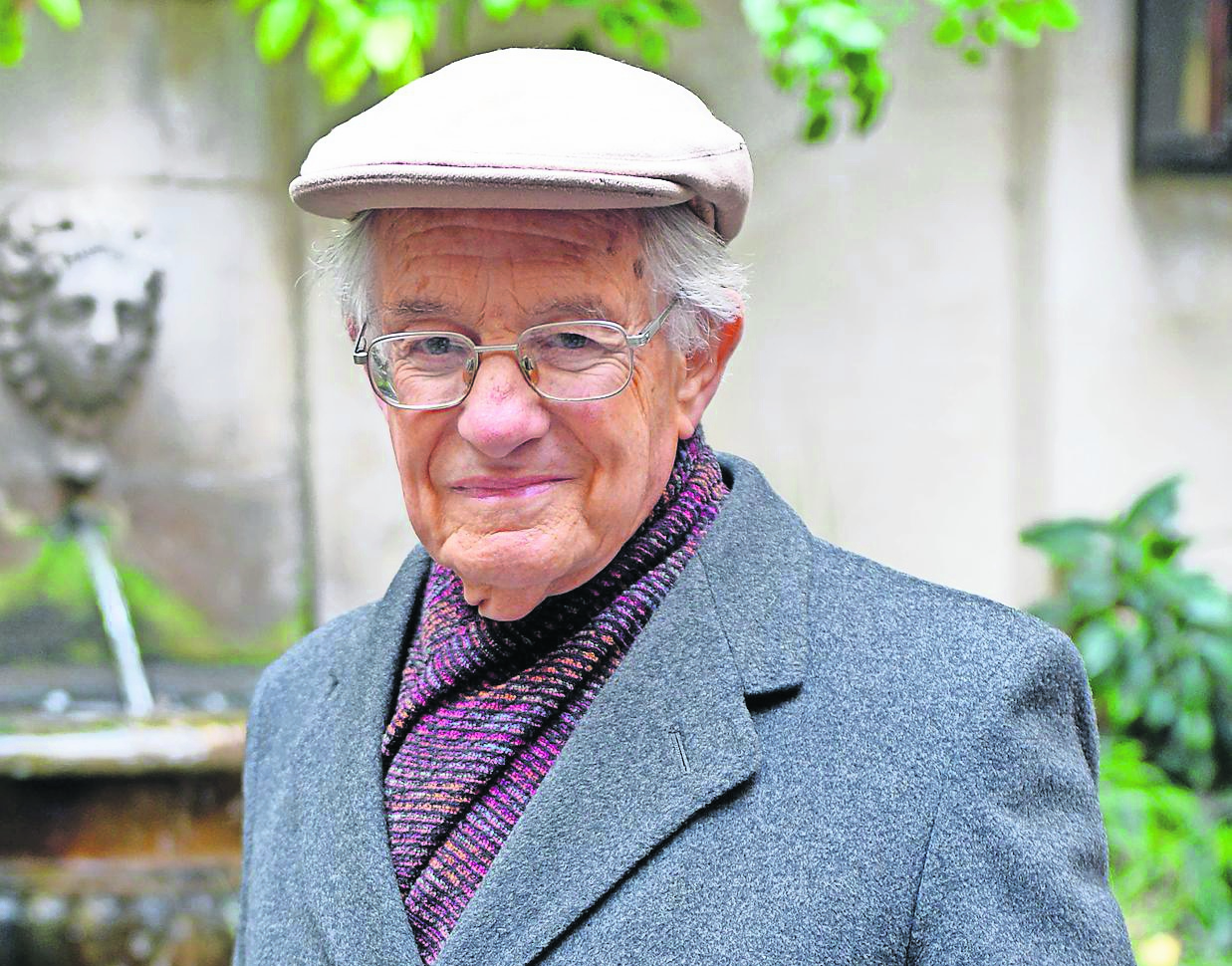
Feuchtwanger in 2013.

Curious four-year-olds would always be interested in a new neighbour, and the man who moved into a block of flats opposite Edgar Feuchtwanger’s family in 1929 certainly knew how to make an impression.

“A big black car draws up on the other side of the street,’’ he recalled. “A chauffeur in military uniform opens the passenger door. A man steps out, looks at Aunt Bobbie, then me. He has a little black moustache, just like Papa’s.”

The new neighbour moving into the Prinzregentenplatz in Munich was none other than Adolf Hitler. The Nazi leader had attained notoriety in 1920s Germany with his publicity stunts, beer-hall rhetoric and time in prison following an attempted putsch, where he had begun writing his rambling, viciously antisemitic and disturbingly ambitious political testament, Mein Kampf. Munich was where his movement seemed strongest, though in the next few years, the Nazi party would extend its national presence greatly. In 1933, machinations at the top of the enfeebled Weimar Republic allowed Hitler to inveigle his way into power as chancellor, after which he would ruthlessly turn the country into a dictatorship. The new chancellor, however, often ill at ease in the German capital, Berlin, returned frequently to his Munich home.

There was a banality to Hitler’s presence, Feuchtwanger later recalled. Feuchtwanger was by then an accomplished historian and refused to embroider his memories for sensationalist effect. He remembered his mother complaining that their milk deliveries were being jeopardised by the demands of Hitler’s growing entourage. When Feuchtwanger, out for a walk with his nanny, first came face to face with Hitler himself, he was dressed merely in a mackintosh and trilby. Sometimes, from another vantage point in a friend’s flat, he spotted the Nazi firebrand dozing in a garden deckchair.

After Hitler became chancellor in 1933, however, there were more striking and sinister sights and sounds to observe: the screeching of his motorcade’s tyres, the jackboots of his bodyguards, the crowds outside his flat shouting “Heil Hitler’’. One morning in June 1934, Feuchtwanger noticed a commotion and realised later that this was probably the moment when Hitler set off to arrest senior figures in his SA storm troopers, who were then murdered in the Night of the Long Knives. The doomed SA leader Ernst Röhm was another near neighbour Feuchtwanger had come across, “a thickset, brutish-looking man”.

In 1938, he saw the chancellor return in triumph to Munich after annexing Austria in the Anschluss. Later that year, when European leaders gathered to sacrifice the security of Czechoslovakia in the Munich agreement, the British prime minister Neville Chamberlain arrived obsequiously at the Führer’s flat to sign the infamous piece of paper promising, Chamberlain vainly claimed, “peace in our time”.

Despite their grandstand view of the Führer’s activities, Feuchtwanger’s Jewish family took some time to realise the peril that Hitler’s murderous, antisemitic ambitions posed to them. They were a family that had seen themselves as highly successfully integrated into German society. His mother, Erna, was a dressmaker, and his father, Ludwig, had trained as a lawyer and ran a successful publishing house. Eminent literary figures, including Thomas Mann and Bertolt Brecht, visited their home. “My father was very connected to German culture,” he said. “That was his life.”

While his father’s parents had been Orthodox Jews, he explained, “Jewishness didn’t play a big role in my life before the rise of National Socialism”. His parents’ initial response to the imposition of Nazi ideology in the Third Reich was to attempt to weather what they hoped would be a short-lived storm, talking of Hitler as a “ridiculous figure” who would be a “temporary phenomenon”.

His father was sent to Dachau and the Gestapo looted their home

When Edgar brought back schoolwork he had embellished with swastikas to please a Nazi-obsessed teacher, his father did not complain, knowing that such a response “would have endangered us all. They didn’t want trouble; they didn’t want me to fight back.” Edgar had to attend long school rallies with arms outstretched in the “Hitler greeting’’, endured by resting his arm on the shoulders of the pupil in front.

Gradually, he noticed the spread of antisemitism into social as well as school life, as he was no longer invited to other pupils’ homes.

Pressure on his family intensified after Nazi race laws took effect, imposing all kinds of restrictions on Jews, and his father lost his job. The family’s position had been further endangered by the anti-Nazi activities of his uncle, Lion Feuchtwanger. He was a successful playwright and novelist whose bestselling work Jud Süss (Jew Süss) was later twisted by the Nazis into an antisemitic propaganda film.

Another of his novels, Erfolg (Success), had enraged Hitler by satirising him as a garage mechanic leading a party called the “True Germans’’, stirring up aggrieved inhabitants of the beer cellars facing hyperinflation and economic ruin with wild rhetoric.

The writer had been forced into exile in 1933, but Feuchtwanger’s own family did not seriously consider leaving until his father was arrested and sent to Dachau concentration camp after the Kristallnacht pogrom of 1938. While he was there, the Gestapo arrived at their flat to loot his library, talking with supreme cynicism of “making the books secure”.

“We just felt so helpless,” Feuchtwanger remembered, fearing “that someone could come and knock us down dead and no one would do anything”. After six weeks, his father was (unusually) released but was now “seriously weakened”, very thin, his shaved head covered with signs of bruising and frostbite. “I scarcely recognised him,” Feuchtwanger wrote later. The family immediately began to plan emigration, helped by Lion, buying a family visa for Britain for the huge sum of £1,000. Edgar was the first to move in February 1939, aged 14, travelling by train to the Dutch border and then on a boat to England.

His parents arrived several months later. “I felt I had left an evil empire, that’s the phrase that stuck in my mind.”

His father, initially detained in wartime England because of his nationality, later worked as a translator for the British Army but died in 1947. Edgar, meanwhile, won a scholarship to Winchester College in the town where the family settled, his classmates faced with his surname deciding to nickname him “fish finger”.

After military service, he studied history at Cambridge, taught in adult education and joined the academic staff of the University of Southampton. In 1962, he married Primrose Essame, a teacher and the daughter of a major general. They had three children: Judith, who became an HR director, Adrian, a translator and interpreter, and Antonia, a member of the South Downs National Park Authority.

Feuchtwanger’s academic publications ranged across British and German history.

There were biographies of Gladstone and Disraeli and an account of Democracy and Empire, Britain 1865-1914. He also wrote on the German roots of the British monarchy in publications such as Albert and Victoria. On German history, he published a survey of the fateful 1918-33 period, From Weimar to Hitler, an account of Prussia: Myth and Reality, and a biography of Otto von Bismarck, exploring how the Junker landowner became a formidable state-builder, diplomat and ruthless pursuer of power, “one of history’s most prominent back-seat drivers”. He was also a shrewd observer of dramatic developments in modern German life, such as the reunification that followed the end of the Cold War.

Feuchtwanger was a visiting lecturer in Frankfurt and became a regular visitor to the country of his birth. For his contribution to Anglo-German understanding, he was awarded the German Federal Order of Merit as well as an OBE in Britain.

He once joked ruefully that, despite all his accomplishments, he was known by some colleagues simply as “the bloke who lived opposite Hitler”. In later life, realising the significance of what he had witnessed as one of the last surviving individuals to have seen Hitler at close quarters, he devoted time to recording his memories. He published an autobiography in 2010, translated into many languages, and a novelised version of his experiences as a child in 2012. His touching and often humorous letters home to his parents after arriving in England, compiled with the help of his daughter, Antonia, were published in German this year and will appear in English in 2026.

Hitler, he reflected, had been dangerously underestimated. His story showed that “when societies are plunged into crisis and citizens become paranoid, it is time for vigilance. The veneer of civilisation turns out to be thin. Scapegoats are sought.” The Nazi leader might have had his banal or comic side, but he was “an extremely clever man” who “understood modern societies”.

His rise had ended in the horror of the Holocaust, whose millions of victims had included a favourite aunt, Bella, murdered in Auschwitz. Feuchtwanger had marked his own survival after the war by returning in the 1950s to visit the Munich flat where, as a young Jewish boy, he had observed the Nazi leader living. It was now a police station. “And I thought, I’m still here, and Hitler would be spinning in his grave if he knew.”

Edgar Feuchtwanger OBE, historian, was born on September 28, 1924. He died on August 22, 2025, aged 100

Saturday, October 4, 2025

DT25017 Festival of Britain 75th Anniversary 2026 V01 041025

 So the Labour Government at their recent Party Conference missed a golden opportunity to build upon all the patriotic Union Jack waving across the country by announcing a Festival of Britain 75th Anniversary event to be held in 2026. Ok they have got to get a move on organising it and financing would need to be very dependant on sponsorship deals since no are funds available. Keir Starmer is always criticised for not being pro-active enough. This could be his big chance to make something happen and it needs to be now otherwise he is on the road to losing the next election. Take a look below at the original Festival of Britain Brochure back from 1951. If nothing else the adverts make for very interesting reading. Banno 


When you launch this link below Google will request you have to download it. Answer yes. And yes to everything else. It will take sometime to download but with patience you will get to see it. I promise. But just remember to click the download button (vertical arrow in a circle) a final time after the progress bar has completed the download otherwise you will be waiting forever to see it. Banno 


https://drive.google.com/file/d/1SeA8TGPdpk-0_JBN9GNpl1y_dGK-HUGx/view?usp=drive_link