It’s difficult to imagine how he lives his life flying Executive Jets and his own vintage aeroplane a Stearman 832. It serves to illustrate how flying is so integrated into the American culture. Rick even has his own airstrip and hanger.
Sunday, December 28, 2025

DT25020 Consilience - EO Wilson V01 281225
As technology speeds ahead, human wisdom is ever more the answer
The age of infinite information is magical but overwhelming. It’s us who need to decide what works
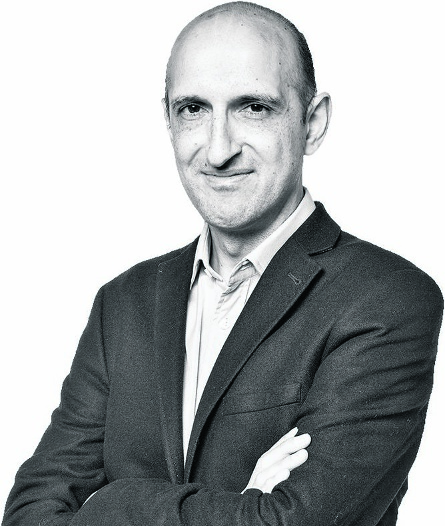
Matthew Syed
If I had to pick one quote to summarise the state of the world from the vantage point of the last days of 2025, I would go for EO Wilson’s phrase in his book Consilience. Wilson was perhaps the closest thing in recent times to a polymath, a brilliant biologist who wrote about ants but extended his vision to trends in civilisation. Towards the end he wrote: “We are drowning in information, while starving for wisdom.”
I say to this: bullseye! It is easy to suppose that knowledge and wisdom are bedfellows; perhaps even synonyms. Wilson regarded them as existing in a deep, if sometimes creative, tension. Where knowledge can be gained by taking a dive into a given area, specialism or silo, wisdom is about bringing insights together, the wood rather than the trees.
There is no doubting the sheer quantity of knowledge, scientific and technological, in today’s society. On Christmas Day I spoke to my mum, who was on a cruise in the Caribbean, with a device called an iPhone, connected to the internet via satellites, and then had a video call on Zoom with other relatives on the other side of the world, before taking part in a family quiz compiled by ChatGPT, which asked questions tailored for the different age groups, beautifully formatted, within five seconds of being asked. For a visitor from 850 or 1850, or indeed a few decades ago, this would be indistinguishable from magic.
Why, then, are we in a bit of a muddle? Why has growth petered out (the Nobel laureate Robert Solow expressed the mystification of a generation of economists when he said: “You can see the computer age everywhere but in the productivity statistics”)? Why are countries like ours struggling with potholes or getting parts of the NHS to talk to one other, let alone running a mildly rational energy policy? How in an age of Moore’s law and other “exponentials” does life seem squeezed, violating Keynes’s prediction that we were set for an age of abundance?
I think Wilson’s observation expresses part of the answer. As technology races ahead, we face an implementation problem. You probably already sense what I’m about to say. It takes a while to figure out how to use any new technology. It took time for me to learn how to use the internet, email, social media and Zoom, but when you examine the daily drumbeat of life (at least for me as a journalist), there is now an imperative to deploy the (undoubtedly huge) benefits of ChatGPT5.2, which is a little different from ChatGPT4.0 or 3.0 and will undoubtedly be different from 6.0 and its successors, not to mention dozens of peripheral developments.
With previous disruptions — agriculture, the printing press and so on — there appears to have been a dip in growth during the adoption phase. This was followed by a boom as societies integrated them into everyday life. Today we struggle to get through the adoption phase because the moment we have mastered one technology, a new one arrives. Of course, a company or state could stick to the previous iteration of any given technology, but it would run the risk of becoming Kodak in the age of digital photography or Blockbuster in the age of Netflix. In this ever more frantic dance between innovation and adoption, we glimpse a telling symptom of our age: exhaustion. We are forever seeking to catch up with an accelerating conveyor belt we ourselves set in train.
'' I smile when politicians say it is ‘obvious’ how we should transform the state
The other aspect of this predicament can be seen by coming back to Wilson. I described him as a polymath but I was using the term loosely. There is no such thing these days. As knowledge races forward, it is broadening dramatically. In the 18th century all knowledge was said to be contained in the Encyclopédie, a 17-volume compendium compiled by two French intellectuals. It was considered possible back then for a single individual to (as one later scribe put it) “hold all of western civilisation in their mind”. Today there are 100 million papers in the Web of Science and counting. Knowledge is no longer a small but manageable land mass; it is a vast and expanding set of islands — a gigantic Polynesia — where no one person can grasp a fraction of the overall terrain.
This creates a problem, since all policies pertaining to a modern, complex society are not about depth of knowledge but breadth; about seeing the whole rather than the parts. It is why I smile when I hear Reform UK say it is “obvious” how we should transform the state, as Elon Musk did on the other side of the pond. I agree that reform is necessary, but I dispute the idea that it is always easy. A sensible energy policy, for example, is not just about “knowledge” of fission technology, grids, planning, infrastructure, thermodynamics, procurement, geopolitics and more; it is about combining insights from all those areas, weighing trade-offs and making judgments wisely. As knowledge expands and splinters, this integrative wisdom becomes ever more elusive.
If I could have one wish granted, it would be for more people to see the world in these terms. Let me offer two ways such a perspective might help. First, as complexity grows, simplicity (and clarity) of vision becomes more important, not less so, particularly for a state. A leader who can articulate a shared goal or set of principles can galvanise people to co-ordinate in their millions. Think of Thatcher or Attlee: different visions, but both implanted a sense of where we were going and how we could work together to get there. We think of complexity and simplicity as in conflict but a deep synergy is possible. Wilson hinted at this with the metaphor of a group of ants: it is composed of simple units but embodies emergent intelligence at the level of the colony.
Second, we need a more acute appreciation of the limits of our knowledge. This is an insight with an ancient pedigree but few wrote about it more eloquently than the philosopher Karl Popper, who said: “Our knowledge can only be finite, while our ignorance must necessarily be infinite.” I believe this sentiment, widely held, could prove a vital antidote to our tendency to hubris, the delusion that we can solve our problems with yet more knowledge and technology when those are the very things subverting our collective understanding, as well as placing ever more systemic risks (I think of the harebrained race towards artificial general intelligence) beneath our feet.
I remain an optimist. I am looking forward to 2026. But let us stop pressing our noses up against the trees and seek out the forest, for that is how we will find the answers we crave. “I neither know nor think that I know,” said Socrates in Plato’s Apology. It is perhaps the central irony of modernity that as we incubate ever more technological wonders, and marvel at our own ingenuity, we are losing sight of this ageless wisdom.
DT25019 Social Media Disclosure V01 281225
In the world of radical self-disclosure, no secret is off-limits
Once only celebrities lined up to overshare, but now ordinary people’s online stories of murder, trauma and betrayal are luring an audience hungry for raw emotion, writes Megan Agnew
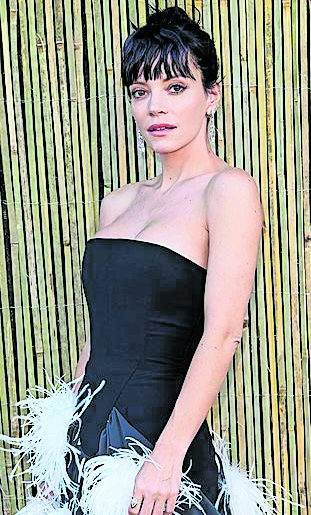
Lily Allen sang of her pain
‘Ive actually been wanting to talk about this for a long time,” says a man called Anthony, looking straight into the camera. Over the next eight minutes, Anthony tells “The Equinox Story”, a sincere, real-life drama involving his luxury gym in Connecticut, a married man and a steam room. “This is going to have to be two parts, guys,” he says when he gets to the end (TikTok, 3.1 million views).
There are thousands more viral videos like this — hours and hours of people talking about terrible trauma or inconsequential gossip to an audience consuming every word. There are women jilted at the altar. Infidelity, divorce and estrangement. The videos have titles such as: “I found out my husband was cheating on me on my wedding day”, “Sharing my story about my toxic motherin–law” and “Mom murdered my dad part 1”. Likes, views, follows, comments, more, more, more!
The online world is populated with “content” designed to feel like behindthe-scenes revelations about people’s otherwise anonymous lives. Social media has bred an appetite for extreme self-disclosure and its algorithms have pushed us into the age of the great confession.
“We’re living through an era of radical self-disclosure,” says June Deery, professor of media studies at Rensselaer Polytechnic Institute in New York and the author of Reality TV. But where all of this used to be the reserve of public figures, it has now been adopted wholesale by the rest of us. “Ordinary people are narrating their private lives to vast, unseen audiences,” says Deery. “It is a strange blend of catharsis and performance: part therapy session, part self-branding exercise.”
“People use social media to present the best version of themselves and for a while everyone thought that meant the cleanest and most manicured version,” says Hannah Beer, author of I Make My Own Fun, a novel about an obsessive celebrity relationship, for which she spent months researching fan and follower-culture online.
“Now the pendulum is swinging the other way.
People want to be messy and raw, spewing their guts up.
‘Authenticity’ gets attention.
And the first people to understand this were celebrities.”
At the end of October, Lily Allen released the album West End Girl, a 14-track autopsy of a marriage, largely understood to have been about her own to David Harbour, star of Stranger Things. She sang about finding butt plugs and condoms, about confronting the other woman, Madeline, and still wanting him to love her. “Now you’ve made me your Madonna,” she sings, “I wanna be your whore.”
In September, the author of Eat, Pray, Love, Elizabeth Gilbert, published her third memoir, All the Way to the River, and it was far from her 2006 romantic journey of self discovery through Italy, India and Bali. Instead it was an account of Gilbert’s final years with her partner, Rayya Elias, who died of cancer in 2018. In it, the two binged on “alcohol, weed, Xanax, psilocybin, sedatives, sleeping pills and ecstasy”.
Gilbert gave promotional interviews from the converted church in New Jersey she bought for Elias at the start of their romance.
She dissolved her lip filler and shaved her head. She found her real, rawest, most authentic self — again.
While celebrity “tell alls” are nothing new, this kind of radical self exposure has become a currency in itself and a person doesn’t need to be famous to trade in its value. “So y’all want to know the scariest thing and it’s happening to me now,” says Cortney, a stay-at-home mother whose husband wants a divorce and is cutting off access to their bank accounts. Filmed in her car while she’s driving and posted to TikTok, it has more than nine million views.
The desire to know intimate details about other people’s lives is a survival mechanism, says Frank McAndrew, a professor emeritus at Knox College, Illinois. “In our prehistoric world, we lived in groups of about 150 people and to be successful you had to know everything about everybody,” he says. “We’re interested in information that’s useful to us and scandal is one of the main things we can take advantage of.”
The consequences, however, have changed. “We used to tell someone something and it would slowly move through the chain of people,” says McAndrew. “Now you hit a button and we’re not yet good at dealing with how quickly it moves. And that can backfire.”
Monday, December 22, 2025
DT25018 The PhD V01 231225
Having to fake your PhD? That’s so Seventies
The sheer quantity and declining quality of postgraduate degrees makes them easier to obtain but increasingly worthless

Kathleen Stock
The 1970s really was another country. Polyester counted as a modern fabric, smoking was allowed on aeroplanes and a fake master’s degree was impressive enough to entice employers. That last bit is what I inferred from the story of Dame Anne Limb, whose CV was revealed this weekend as containing some creative fiction.
Though the chair of the King’s Foundation has garnered many accolades during an illustrious career — including a recent nomination to the Lords by Sir Keir Starmer — an MA supposedly acquired early on has turned out to be invention, as has a PhD. Limb now admits she never got a master’s, though she says she has an equivalent French qualification. She also claims to have been self-identifying as a doctor in light of various honorary PhDs.
Unfortunately, this explanation only emphasises the attitude that titles are important but the achievement behind them less so.
The lure of getting prestige on the cheap has always been a problem in higher education, but the threat is evolving. These days, to pretend to have an MA would be fairly pointless as it wouldn’t confer any meaningful edge. Last year, taught postgraduate degrees awarded by UK universities outnumbered undergraduate ones for the first time, unleashing 467,765 master’s-holders on to the career ladder. The sector has risen a staggering 67 per cent in five years. Though most of these degrees went to international students, 29 per cent went to domestic ones. That’s a lot of competition.
And it’s not sheer quantity that has lowered the status of many courses; it’s also the quality. As domestic fees have stayed capped, the lucrative taught postgraduate degree business has become indispensable to the survival of universities. In practice this means that for some courses you would have to write your application in green crayon not to get in; and even then, rejection is not guaranteed. The few exceptional students who apply, believing the experience will be more intellectually satisfying than undergraduate days, often arrive to find a set of dissolute, mediocre classmates trying to spin out student life for as long as possible — not so much gaming the jobs market as hiding from it completely.
Doing a history MA significantly reduces your earning power
Teaching, meanwhile, is typically done as cheaply as possible. This can mean students on different MA courses converging for shared modules or just recycling undergrad teaching but with longer assessments. Partly for such reasons, doing a master’s in fields such as politics, history and English significantly reduces your earning power in the medium term, compared with doing undergraduate study only.
For those genuinely interested in a subject, it can still be a personally rewarding path to take. But a quick thought experiment should deter any others, and it’s one you are unlikely to hear from a university admissions officer. Would you still want to do this if you knew it would make no positive difference to your career prospects and may even harm them? If the answer is no, you’d probably be better off getting out of the diploma mill and finding a smarter way to get where you want to go.
Meanwhile the social capital of PhDs has also changed. From the outside, perhaps it still seems that you must be very clever to get a doctorate. In reality, assuming you stay the distance and meet the word count, it’s almost impossible to fail. One study found that between 2006 and 2017, only 3.3 per cent of candidates who took their viva (final oral examination) failed it, and the vast majority (79 per cent) got only minor corrections. The official reason is that all weak students have been weeded out beforehand, but given the institutional desperation for fees that seems unlikely. Actual reasons include the embarrassment of telling a student who has devoted years of his life to a project that he has tanked it, not to mention the implied humiliation for his supervisor. And there’s also the fact that asking for major revisions is a pain in the neck for time-pressed examiners, because it means having to read the whole bloody thing again later.
Eccentric researchers or inspiring teachers will be in short supply
The real struggle for academic status is no longer simply getting a PhD but getting a fully funded one. There is intense competition for very few grants, and nets are spread across many subject areas at once. This creates an incentive to mould oneself into the sort of generic applicant an interdisciplinary committee of lecturers and administrators might like. So in most departments you will find sharp-elbowed, highly organised students, adept with fashionable buzzwords and fancy software, being funded to work on queer digital allotments or whatever other theme a research council has just earmarked as urgent. Alongside them, you will get a few more traditional absent-minded types, spending their own money to beaver away diligently but unfashionably on romantic poetry or the Crimean War. When it comes to the vanishingly small number of lecturer jobs available, it is only the former group that stand even a scintilla of a chance.
So future departments are likely to be short on brilliantly eccentric researchers or charismatic, inspiring teachers; but every lecturer is going to know exactly how to fill in a grant form or make a PowerPoint. Or at least: that’s assuming they aren’t instructing AI to do it for them. Because the more formulaic and bland that preferred academic skills become, the more likely machines will be able to get someone into the system, and fairly undetectably too.
Tomorrow’s batch of young thrusting types, covetously eyeing up university prestige, won’t need to invent postgraduate awards for themselves retrospectively. They will simply let a chatbot handle the application process instead.
Saturday, December 13, 2025
DT25017 Changing Typefaces V01 131225
‘Woke’ font creator is happy to be cancelled
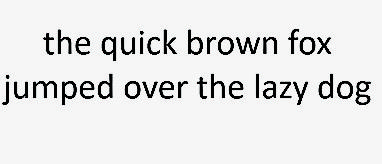
Calibri was created for Microsoft in 2007 to be easy to read on a screen
The designer of a typeface that was dropped by the US secretary of state, claiming its use was a diversity measure, has said the suggestion his design is inclusive was a “compliment”.
Marco Rubio ordered diplomats to return to using Times New Roman, calling the move in 2023 by his predecessor Antony Blinken to adopt Calibri, a modern, rounded sans-serif typeface, a “wasteful” diversity initiative.
The Biden administration said at the time that “fonts like Times New Roman have serifs [wings and feet] or decorative angular features that can introduce accessibility issues for individuals with disabilities” such as poor vision.
Rubio told US diplomats that the return to Times New Roman was done to “restore decorum and professionalism” to the department’s written work.
Lucas de Groot, who created Calibri, said the switch was a “bad choice” because his typeface was designed to be readable in small sizes on screens for everybody, including those with impaired vision. “So if Rubio thinks it’s inclusive, he’s right,” he told The Times.“It’s a compliment, of course.”He dismissed any accusation that his font was “woke” as “politics”.
De Groot noted that Microsoft, for which the typeface was created, moved from Times New Roman to Calibri in 2007 because of the typeface’s limitations on a digital screen.
Times New Roman was designed for The Times in 1931 by Stanley Morison, who called it “English, direct, simple and free from frivolity”. De Groot said the font was “really beautiful” when used for print.
However, he said the digital version of Times New Roman could create visual disturbance on screens. De Groot added: “If you write in capitals, like the US administration loves to do all the time, the spacing is really irregular.
“Some letters are very tight, other letter pairs are very loose. And this gives a very unprofessional look to the serif font.
“Choosing a serif font for official stuff, no problem with that, but the digital Times New Roman as it is built into the Microsoft operating system and Office, is not a good choice.”
In an editorial that same year, The Times said the State Department’s switch to “the round-edged upstart”
Calibri was a “monstrous misjudgment” and “dumbing down”.
Tuesday, December 9, 2025
DT25016 Prime Minister on TikTok V01 081225
Keir, you’re too old for TikTok — but if you must use it ...
The PM has joined Gen Z’s favourite social media platform. Here’s how to match Trump’s success on it.
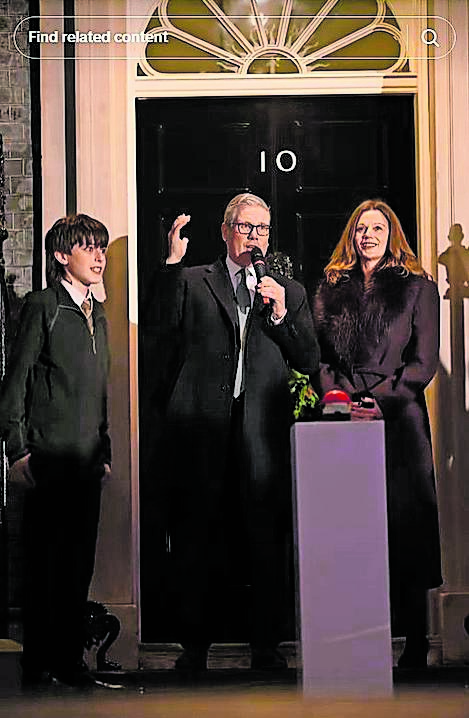
Keir Starmer making his TikTok debut
Just before he headed off for an official visit to China, Keir Starmer announced that he’d joined TikTok via a short film of the PM and his wife switching on their Christmas tree lights at No 10 Downing Street. This despite the popular social media tool being technically restricted on government devices (too many scary security breaches from China) and, ironically, also banned in China (the CCP not wanting to encourage any form of western-made content reaching Chinese people).
My heart sank. TikTok? Really? Starmer is 63 years old. Doesn’t that make him — like me — about 40 years too old for something as grimly shallow and mind-numbingly ephemeral as a platform whose most popular users are a siloed bunch of vacuous nobodies (Khaby Lame? Charli Grace D’Amelio? Bella Poarch? Nope, me neither).
I had TikTok on my phone for a few months and had to get rid of it. Mainly I was looking at my youngest daughter Maddie’s fabulous make-up and styling content (“teethandlove Morbid Mills” 9,099 followers, 418.3k likes — have a look). But elsewhere I couldn’t bear the medium’s thing for reductive politics, talking heads and spaceinvading faces. I found the dumb dancing and earworm music moronic and the way the TikTok machine thought I was really into something because I’d looked at it for more than 20 seconds was very annoying. (Just because I watched a spectacular car crash clip doesn’t mean I want to see 30 more of them.)
Why has Starmer done this? Actually, the more pertinent question is why on earth didn’t he do it months (years) ago? Here are the figures: nearly 38.7 per cent of the UK population — approximately 23 million people — is expected to be on TikTok by the end of 2025. The largest demographic of users (more than 83 per cent) is those younger than 35, with 18-24-year-olds (aka young voters) the biggest group.
TikTok is now the third most-used social media platform in the UK, even bigger than X. And the UK ranks fifth globally in the total number of TikTok users. To put that in perspective, BBC2’s Newsnight attracts between 300,000 and 500,000 viewers, the majority of them older than 60.
The PM joins a whole raft of other politicians — Emmanuel Macron (6.5 million followers), the Brazilian president Luiz Inacio Lula da Silva (aka “Lula”, 5.3 million), Nigel Farage (1.4 million) and Jeremy Corbyn (283,000) — who have also chosen to engage with the public by way of a communications platform dominated by endless footage of hooded yobs on ebikes swiping pedestrians’ mobile phones and teens showing off their goofy moves.
Talking of which, Donald Trump has 15.38 million TikTok followers and, with help from his 19-year-old son Barron, seems to know how to engage with it. Trump does his dumb YMCA Dad-dance thing, talks about Joe Rogan and frequently refers to how he “saved TikTok”. Sitting at his Oval Office desk looking like an orange Marvel comic rendering of a president, Trump tells his young audience that “one day, one of you kids will be sitting right here at this desk”. It’s loud, clear, brash, short-attention-span, straightto-camera, in-your-face stuff that follows TikTok’s “three-second rule” of engagement and sets a benchmark for staying popular and down with the kids in 2025.
I had TikTok on my phone for a few months. I had to get rid of it
Exactly what content should Starmer be posting? How can he attract more followers than Farage? I asked the Google Gemini AI model to help. Here’s what it suggested: “Authenticity, entertainment and reactivity are key. The platform favours raw, natural and authenticfeeling content.”
Easy. I’m thinking plenty of England football shirt action during the World Cup in 2026, more stuff with Starmer’s gorgeous “sassy” wife, Victoria, and her deeply “ human” and “authentic” NHS job. And yes, I know they are shy, but let’s see a lot more of the kids. That letter you wrote to your daughter (and posted on Instagram) would have been ten times more engaging and effective on TikTok with a voiceover of you reading out loud.
“Mix policy with humour/meme culture: content that incorporates popular memes, cultural references (like using clips of TV shows) or light-hearted political ridicule (aimed at the opposition) tends to be highly shareable and effective at gaining views.”
Oh dear — this bit might need some serious workshopping. Starmer’s recent (and quite hard to say) political catchphrase “delivery, delivery, delivery” is never going to worry TikTok trends such as “the Roman Empire” or “6-7”. Ditto “another future is possible” and “security, prosperity, respect”.
Can’t see his “Plan for Change” going TikTok viral either.
Friday, December 5, 2025
DT25015 A Boat Builders Story V01 052225
Boat building paid for my first home’
Abbey Molyneux now has her own boatyard, after learning skills that gave her the money to get onto the property ladder
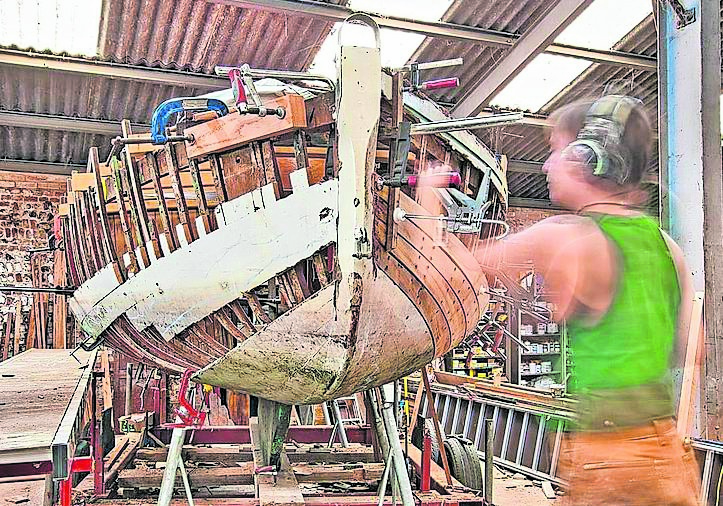
Abbey Molyneux has restored more than 100 boats in her yard
I grew up in Devon in a poor family and was home-schooled. I didn’t do well academically but I knew one thing: I wanted to be successful at something. A boatbuilding apprenticeship in Essex was on offer, so I bought a oneway Megabus ticket and arrived with a few bags containing all my belongings. I lived in a flat-share and cycled to work, paying my rent by working in the evenings at a local foundry (says Abbey Molyneux, 34).
It was hard. Not everyone was welcoming. At first, they wouldn’t let me do much, saying I was a girl and too small, or that I couldn’t handle the work.
What they didn’t know was that while they were taunting me, I was learning and taking notes. The shipwright’s parting words were, “You’ll only ever be able to build small boats.” I’ve now built more boats with my tiny hands than he did in his entire life.
After my apprenticeship, I moved to Dennett Boat Builders on the Thames, where I lived aboard a £2,000 motor cruiser. My fortunes changed when I became the protégé of the owner, Steve Dennett. For seven years, I stuck to him like glue, soaking up knowledge as the only woman on a team of 14.
One memorable project was the restoration of a Dunkirk Little Ship; it had rescued Allied soldiers in the Second World War. It arrived at the yard infested with mice.
I was so dedicated that I even worked on Christmas Day, laying a teak deck simply because I loved it. By the end, we had completely transformed her.
For the first three years, I was trained to build solely by eye — no instructions, no measuring. If Steve caught me using a tape measure, he threw it in the river.
I learnt to understand a boat’s curvature, its timbers and its limits.
Life afloat was tough, though, without a bathroom or kitchen, and with money running out, I sold my boat, Whitemouse, for an £8,000 profit, and relocated to Norfolk, armed with a motorbike, some tools and about £100 to my name. I made a simple, firm vow. I would earn my way to the four things I wanted — a truck, a house, a dog and my own boatyard.
I landed in Norfolk in 2021 with nothing but my boat-building skills.
Three months in, a farmer offered me a caravan on his land. After I shared my story, he went a step further and gave me a barn to work from. My first project was his magnificent 1932, 43ft wooden Norfolk Broads cruiser. For 102 days, I poured myself into the restoration, crafting ribs from a single oak tree felled on his farm. I worked to the point of exhaustion, joking that I had arms like Popeye, even as they grew too tired to lift the varnish brush. The Queen of Light was not only shown at the Henley Boat Show but also served as the founding project to launch my business, Abbey Boat Builder.
I bought more tools and began to attract customers. In my first year, I turned over £60,000, which eventually led to signing a lease on a new boatyard in Reedham. The yard cost me £150,000, which I didn’t have a penny of when I did the negotiations, so I just kept building and invoicing, and soon I had a fleet of trucks and cranes moving me in.
Since starting my business, I’ve restored more than 100 boats.
After years of not living in a house, I’ve finally bought my first home, for £180,000. It’s a stark contrast to life on the water. I hadn’t realised how exhausting it was, constantly being kicked off moorings, worrying about the weather. Now, I love my bed in my own house. But for me, boats are my true home, where I find my deepest joy. I started with nothing but a few clothes in a bag and I kept at it. Now I have my own business and a home made of bricks.
As told to Annie Hayes
Thursday, December 4, 2025
DT25014 Understanding a Web Site Address. V01 041225
A Top Level Domain (TLD). The last part of a web address (URL) after the dot.
🌐 Common Domain Endings and What They Stand For
🏛️ Traditional / Original TLDs
.com
• Stands for commercial
• Used by businesses, now used for almost anything
.org
• Stands for organization
• Originally for non-profits, now open to anyone
.net
• Stands for network
• Originally for networking/tech companies, now widely used
.edu
• Stands for education
• Restricted to accredited U.S. educational institutions
.gov
• Stands for government
• Restricted to U.S. government entities
.mil
• Stands for military
• Restricted to the U.S. military
🌏 Country Code Domains (ccTLDs)
These are two-letter domains assigned to countries.
.us — United States
.uk — United Kingdom
.ca — Canada
.au — Australia
.de — Germany (Deutschland)
.jp — Japan
.in — India
.cn — China
.cc — Cocos (Keeling) Islands
.tv — Tuvalu (popular for video sites)
.io — British Indian Ocean Territory (popular in tech)
Even though these belong to countries, many are used globally.
🤖 Newer / Themed TLDs
Created in the last decade to allow more naming options.
.app — Apps / developers
.ai — Artificial intelligence (actually Anguilla’s ccTLD)
.tech — Technology sites
.blog — Blogs
.shop — Online stores
.dev — Developers
.design — Designers / creative work
Great — here’s a clear breakdown of how a URL is structured, including TLDs, second-level domains, and subdomains.
🌐 How a URL Is Structured
Example URL:
https://blog.example.com/page1
Let’s break it down:
1️⃣ Protocol — https://
This tells the browser how to communicate with the website.
Common protocols:
• http:// – standard web traffic
• https:// – secure (encrypted) traffic
• ftp:// – file transfer
• mailto: – opens email
2️⃣ Top-Level Domain (TLD) — .com
The last part of the domain name.
Examples:
• .com
• .org
• .net
• .edu
• .uk
• .cc
3️⃣ Second-Level Domain (SLD) — example
This is the main name of the website, chosen by the owner.
Examples:
• google.com → google = SLD
• amazon.com → amazon = SLD
• perma.cc → perma = SLD
The SLD + TLD together make the domain name.
4️⃣ Subdomain — blog.
A smaller section inside a domain.
Examples:
• www.example.com → www is a subdomain
• shop.example.com
• support.apple.com
• mail.google.com
Subdomains are optional and are used to organize services.
5️⃣ Path — /page1
This tells the server which page or file to show.
Examples:
• /about
• /products/item1
• /images/photo.jpg
🧩 Putting it all together
In https://blog.example.com/page1:
Part Meaning
https:// protocol
blog subdomain
example second-level domain
.com top-level domain
/page1 path
If you want, I can also explain:
• what DNS is
• how domain registration works
• how URLs differ from URIs
Subscribe to:
Posts (Atom)