Special Note. The Obituary of Raquel Cook the friend that Hadley Freeman has written about below is added at the end of this post.
Death so often intrudes into midlife friendship
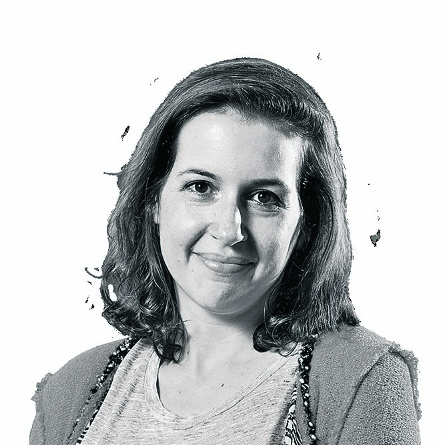
It is raining today and I’m thinking about friendship. The rain because it’s November and the friendship because the writer Rachel Cooke, my lovely friend, died this morning, Friday November 14. I think the pathetic fallacy would have made her laugh, or roll her eyes, or, most likely, both. Six months ago she was sending happy photos from a holiday in the Lake District with her beloved husband, the novelist Anthony Quinn. And now she is dead, at the age of only 56.
No book can you prepare you for that, and Rachel read everything. She also wrote a lot, and the last book she published was, as it happens, The Virago Book of Friendship, which she edited. It is a delicious book, and if I wasn’t crying I would read it now, with its excerpts from so many of her favourite writers: Elizabeth Jane Howard, Shirley Hazzard, Nancy Mitford, authors she and I talked about often. And leafing through the book now, I see Rachel wrote an inscription for me at the front, which I hadn’t even noticed before: “For Hadley, Top friend, Love from Rachel xxx.” And now I have to curl my fingers into fists to stop myself sending her a thank you text.
I didn’t understand anything about friendship until I was over 40. For so many years I thought longevity was all, and I was desperately jealous of people who still had friends from their youth — from school! — seeing it as proof they were better, more complete than me. Everyone knows childhood friendships are the most deeply felt friendships — every book I’d read as a kid had told me so. (Maybe that’s where I went wrong — I should have spent more time making friends than reading about them.) And yet I left behind youthful friendships the way others lose old clothes. What kind of half-drawn human sheds friends? And without any history to fall back on, what is an adult friendship but two people who happen to have vaguely similar lives filling in the time together? I didn’t get it at all. It’s almost laughable to think how friendships between women are often portrayed so negatively. Riddled with envy and backbiting; “toxic”, a word I have never heard applied to male friendship. Or, almost worse, cheesy ideas of “sisterhood” — “you go, girl!” – and “mum friends”, that dismissive term connoting a fleeting relationship based only on circumstance and passive-aggressive sniping. “Can a woman with kids be friends with someone who’s child-free?” is an article I feel like I read, on average, every week. Have these people ever met a woman? Because without the female friends I have made in adulthood, and especially in middle age, I know I would curl up into myself like a terrified caterpillar, wither into ashes and vanish on the wind.
Rachel and I became proper friends about a decade ago, brought together by my longstanding admiration of her and a shared bewilderment at how the feminist rights we’d grown up under were being eroded by gender ideology. No need to get into all that here, but it is pleasingly ironic that, as a result of the recent absurd attempts to render the word “woman” meaningless, I forged more friendships with women than ever before. We met through a political cause, but it’s a cause that, in my experience, attracts brave, smart, funny and loyal women. From working-class feminists like Julie Bindel to stylish bluestockings like Rachel: how lucky was I to find such friends at 40? Going by the roughest of rubrics, Rachel and I did not have much in common. She was married; I am not. She didn’t have children; I do. She loved food; I, well, it’s complicated.
None of it mattered. She cooed over my kids; I was amazed by her cooking. When I went through a bad break-up, she was there for me; when she fought with characteristic fullthroated passion against the sale of The Observer, where she had worked for most of her adult life, I cheered her on. “My boiler is bust so I am warming my cockles on you” was a typical text from her when I wrote an especially savage book review that she enjoyed last year. At this point, I get so much from my tight circle of female friends that I have no idea why any woman would ever need a husband.
Rachel Cooke and I had little in common but it didn’t matter
However, there is one definite downside to having such close female friends in midlife: they — we — have a tendency to die. I — we — lost Deborah Orr, another writer, in 2019, then two of my cousins, then another friend, and now Rachel, all taken away by the cruelty of cancer, all under 60, two under 40. The loss of a friend who has known you since childhood, who still sees in you that little child who got homesick on playdates, decades of shared jokes all gone in an instant: I understand the pain of that, of course I do. But I was not prepared for the sadness of losing those you found just as you finally understood what friendship is.
Nora Ephron once said, “You can’t meet anyone until you become who you are becoming.” She meant that in reference to husbands, but I think the same holds true about friends. It takes some of us a little longer to become who we’re becoming. I knew I finally got there when my life was suddenly full of the most fabulous women. Women like Rachel.
And I realised I was in yet a new stage of life when I started writing articles like this about how much the friendship meant to me, but now she will never
Obituary of Rachel Cooke
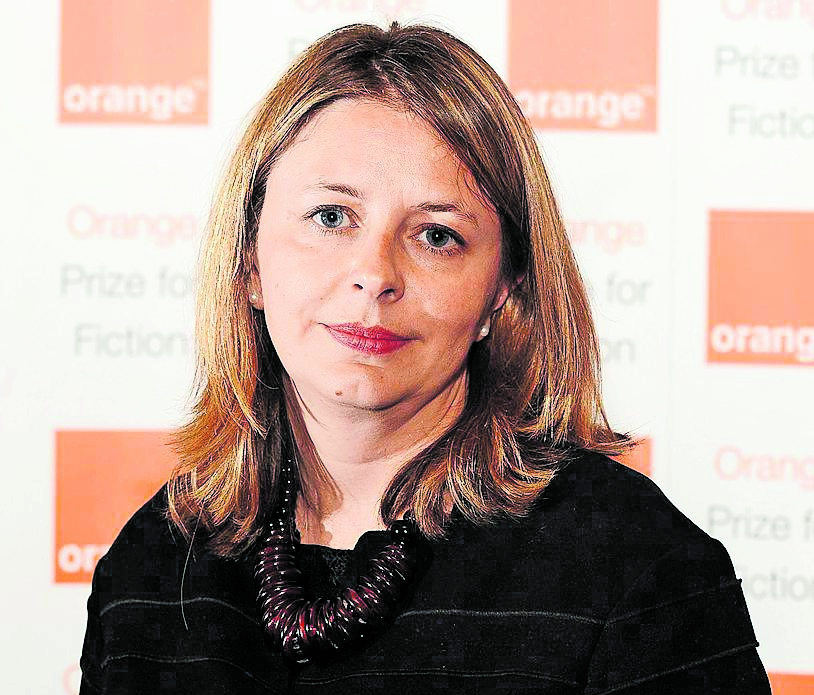
Rachel Cooke drew on a wide cultural hinterland to write about almost any topic with an enviable wit and vivacity.
Yet there were two core subjects to which she regularly returned and which owed as much to an inspirational northern working-class grandmother who had left school at 13 as to her own Oxford education.
One was the pleasures of food, which she wrote about in a monthly column in The Observer. The other was the lives of resilient women, whose stories populated her columns and provided the material for a much-acclaimed book.
Her love of eating she traced back to her Granny Goodson coming to stay when she was a child, bringing with her two suitcases, one containing her clothes and the other a mountain of cakes she had baked. Her grandmother was “touched with a kind of genius in the kitchen” and even better was going to stay with her. Granny Goodson’s Sunderland home was “like being at a spa, except every treatment comprised a meal” with numerous other temptations on offer between repasts.
When Cooke launched her food column in 2009, Granny’s steak and kidney pie — “a thing of beauty and utmost deliciousness” made with her own flaky pastry — was duly acknowledged while other subjects ranged from Brexit’s impact on the food we eat to the home delivery phenomenon.
Few can ever have written about food with quite such an abundant sense of joy. “Omnivorousness was always the source of some pride,” Cooke noted. “If I cook for someone and they don’t ask for seconds, I feel disappointed, as if something has gone very wrong.”
“Her words fell on the page like seasoning,” said Jeremy Lee, the chef and proprietor of Quo Vadis, Soho, who became friends with Cooke having first met her on a trip with the Conran Restaurants group head chefs to Scotland, “where a ghillie [hunting guide] took a great shine to her and chased her into the dining room”.
Together they would wax lyrical about recipes such as the one for parmesan biscuits she gave to her friend the chef Simon Hopkinson, as acknowledged in one of his cookbooks.
“She must have had an amazing constitution and she ate incredibly well,” said Lee. “She loved to tuck into a bacon sandwich just as much as she did a Grand Marnier soufflé, and she did so with equal joy and gusto.”
Cooke was interested too in nutritional health and was savvy at questioning advice that was not firmly evidence-based, resulting in a clever takedown in 2005 of Gillian McKeith, then the host of Channel 4’s You Are What You Eat who, it was later revealed, had no recognised medical qualifications.
For her Observer column, Cooke kept a food diary for a week which she shared with both McKeith and Catherine Collins, a dietician at St George’s Hospital in south London. The difference in feedback, which Cooke set out in a ten-point summary, was stark, with only the latter’s responses supported by research. Cooke was reassured by Collins telling her that she was “on the threshold of safe drinking habits for a woman of your size”, whereas McKeith had insisted, “you drink far too much”.
Her 2023 book Kitchen Person was a collection of 50 of the best columns, and when she was diagnosed with cancer, she mourned the loss of her appetite.
“Once I was greedy, unashamed-ly so. Now I’m a strange sparrow, struggling to peck at a bowl of cornflakes,” she wrote in her final column for The Observer in July 2025.
A lifelong respect for feminine fortitude also owed much to Granny Goodson and the other strong women in her family. The result was a very practical feminism in which she not only praised the “witty and wise pioneering sisterhood” of Germaine Greer and company but equally admired Queen Elizabeth for the “adroit way she wielded her influence”.
It led to her 2013 book Her Brilliant Career, in which she recounted the stories of ten extraordinary women from the 1950s whose pioneering professional achievements — and sometimes complicated private lives — challenged the housewife stereotype and paved the way for future generations. Reviewing the book in The Times, Melanie Reid called it “a vivid, witty, affectionate page-turner about some amazing lost heroines”.
‘She relished a bacon sandwich as much as a Grand Marnier soufflé’
Cooke followed by editing The Virago Book of Friendship, an anthology of writing about female intimacy drawn from the fiction, diaries and letters of more than 100 female writers. When her publisher threw a launch party, she felt as if they were all present: “Virginia Woolf cosying up to Sarah Waters in one corner, Shirley Conran chatting to Charlotte Brontë in another, Edith Wharton wondering why the champagne isn’t premier cru, and Colette about to go outside for a cigarette.”
As a cultural polymath, she reviewed books and art exhibitions for The Observer, was the New Statesman’s TV critic and — more surprisingly — had an addiction to graphic novels which she championed and wrote about more purposefully than anybody else in mainstream media. Her profiles of the likes of Philip Larkin for The Observer were erudite long-form essays rather than mere newspaper columns and she was a perceptive and fearless interviewer for The Observer and Esquire.
She was named interviewer of the year at the British Press Awards in 2006 and writer of the year at the PPA Awards in 2010 for her interviews in Esquire.
Those she listed among her favourite male interviewees included Gore Vidal, Tom Jones and John Prescott.
The last of these gave her a disagreeably hard time at first but they ended up getting on well enough and she subsequently wrote that she had located his “sweet, sad soul”.
Rachel Emma Cooke was born in 1969 in Sheffield. Her father, Rod, was a lecturer in botany at the university, where he met her mother, Liz, who was one of his students and went on to become a biology teacher. After her father took a post at Tel Aviv University she spent several years of her childhood in Israel, where she went to school in Jaffa with Jewish and Arab children.
When she was 11 the family returned to Sheffield and she attended Tapton School, recalling that she was “bullied for being posh”. Conversely, at Oxford University she felt awkward due to what she called her “northern sensibility”.
In later life, she wrote perceptively about straddling the north-south divide.
By then she had been an Islingtonian for longer than she had lived “up there”, as she called it. Yet she believed that she still “understood the world through the prism of being from the north and that it made a difference, from the way I read and ate and listened to music right through to my relationships”.
She is survived by her husband, the film critic and novelist Anthony Quinn. There were no children.
On moving to London, she worked for The Sunday Times Style magazine under its editor Jeremy Langmead, who recalled how she was always up for whatever stunt he suggested, dressing her as a film star to attend the premiere of Evita or sending her on the Tube clad in outlandish clothes and logging the reaction of other passengers. He became a friend and employed her again when he became editor of Esquire, likening her to Victoria Wood in her ability to “find humour in the mundane”.
From The Sunday Times she switched to The Observer where under the editor Roger Alton she blossomed as a writer with a rare insight into the human condition. “Will I be good at dying?” she wondered aloud in an article in 2012 about the Labour strategist Philip Gould’s death from cancer. “I very much doubt it, though why we should have to be good at that as well as everything else, I really don’t know.” Thirteen years later she found herself writing about her own diagnosis. “I feel quite private about the fact that I have cancer.
But the trouble is that I’m a writer: for me everything is copy,” she noted.
Promising readers that she would “keep outing myself and making inappropriate jokes”, she followed with a characteristically witty and non selfpitying example. “When my consultant went through the list of internal organs that would have to go, through my mind was already running a paragraph that began: ‘This is like the Generation Game conveyor belt.’ ”
Rachel Cooke, journalist, was born on July 7, 1969. She died of cancer on November 14, 2025, aged 56

No comments:
Post a Comment