Susanna Gross
When Boris Johnson was editor of The Spectator, he came under pressure from chums, card sharps and jealous rivals to replace Susanna Gross as the magazine’s bridge correspondent.
Every week Gross wrote a column analysing a significant game, concluding with one of those perplexing diagrams that seem incomprehensible to those — including Johnson himself — not versed in contracts, bids and overcalls and who are blissfully ignorant that a Yarborough is a hand with no card higher than a nine. “How could anyone so young and so funny know anything about this fiendishly difficult game?” the future prime minister asked himself. “How could she possibly be more skilful than the middle-aged men who were begging to take over?”
He soon realised that although Gross was only 33, she was already the doyenne of bridge correspondents who knew “far more about the game than any of her conceivable rivals for the job and played better than all of them”. Yet it was not her knowledge and expertise that were the ultimate clincher.
Above all, Johnson swiftly realised that even if you had little intrinsic interest in the subject, as a writer Gross possessed “the supreme gift of a specialist columnist to keep you reading” by adding anecdote and insight to her analysis that ranged far beyond the bridge table to illuminate the ways of the world. To lure in the lay reader week after week required “charm and genius”, which Gross “possessed both in spades. Or trumps. Or both.”
In the end “Suz”, as close friends knew her, served as the magazine’s bridge correspondent for a quarter of a century. Michael Gove, the present editor of The Spectator who also played bridge with her, concurred that it was the urbane wit of her prose as much as her bridge smarts that made her the best in the business. “She played the game expertly, and with panache. But formidable as her skills at the table were, she was even more accomplished as a writer,” he wrote on the news of her death. It was her “unerring eye, both for opponents’ weaknesses during play and for the quirks of character which illuminate the human condition”, that made her bridge column so readable.
Although she wrote about the game and her addiction to it with a droll humour, at the card table she was as serious as it gets. Before David Cameron was married, they played regularly together and she recalled being irritated when “his new girlfriend, Sam, popped by and David kept wrapping his arms round her rather than focusing on the job at hand”.
Gross, who was also a demon blackjack player, won national and international bridge competitions and represented England in the annual Lady Milne Trophy, winning in 2010, 2011, 2013 and 2019. She was also part of England’s mixed team at the 2016 World Bridge Games. “She was the ultimate bridge fanatic. No one loved the game more than Susanna — she thought about bridge every single day,” David Gold, her friend and fellow international player, said.
Fanatic she may have been but she also possessed a zest for having fun and Gold went on to recall how, when they had partnered each other during the 2013 European mixed pairs in Ostend, after vacating the table they “spent the evenings and a fair chunk of the nights drinking and smoking on the beach like teenagers with a couple of other dear friends”.
She played with Harold Pinter, Michael Gove and David Cameron
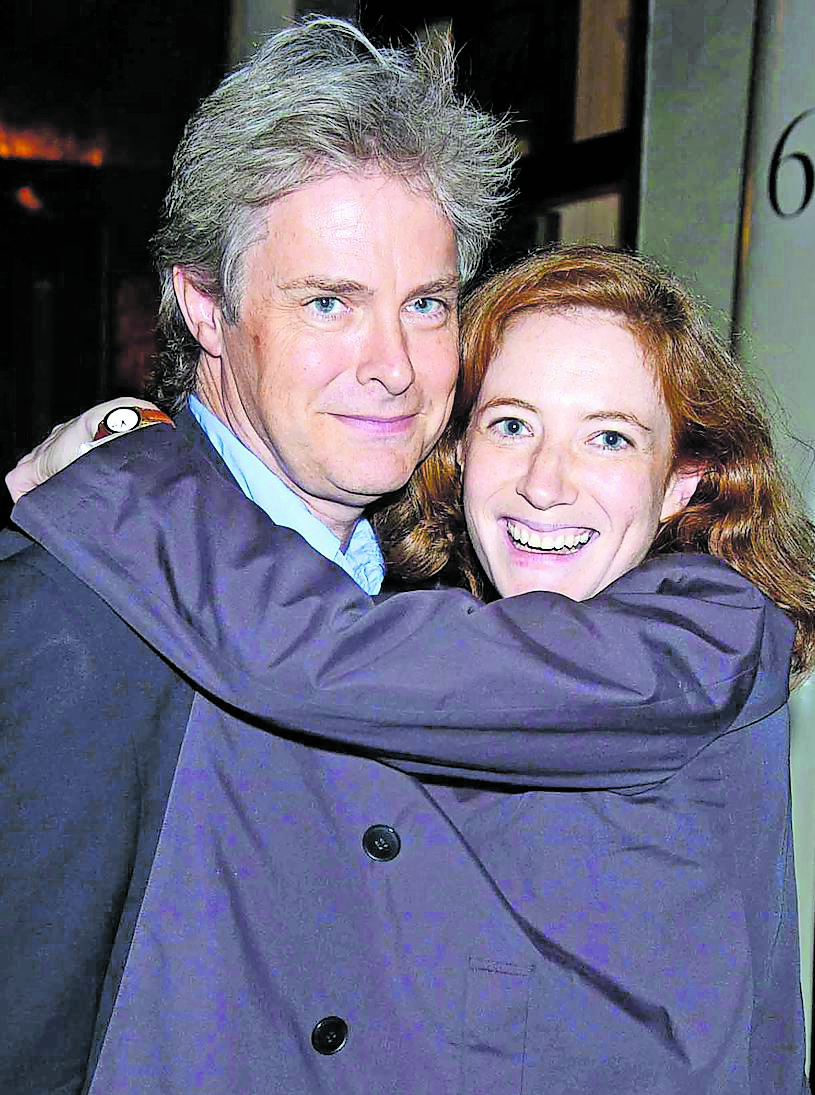
She once made the front page of the News of the World in a clinch with Charles Saatchi, who had recently separated from Nigella Lawson, under the banner headline “Saatchi squeezes another woman” and the tag “No shame”. In fact, Gross was a mutual friend of the couple and Lawson had asked her to make sure that her estranged husband was coping and so she had arranged to have supper with him at Scott’s fish restaurant in Mayfair.
The photo that was splashed across the front page captured them in an innocent departing hug at the end of the evening. Scott’s was perhaps an unfortunate choice of venue given that it was the same restaurant where Saatchi had been pictured a few weeks earlier with his hand around Lawson’s throat and no doubt the attention did not seem very funny at the time. Yet with typical good humour Gross subsequently came to laugh at the dubious — if undeserved — honour of having been the subject of a News of the Screws “exposé”.
Born in London in 1967, she had literary pedigree in her genes. Her father was John Gross, editor of the Times Literary Supplement, and her mother Miriam (née May) was described by Paul Johnson as “the beautiful and elegant queen of the lit eds” for her stewardship of The Sunday Telegraph’s books pages. Literary luminaries of the day flowed through the family home and some of them, such as Harold Pinter and Lady Antonia Fraser, later became bridge partners.
From Godolphin and Latymer School, where the TV presenter Davina McCall and the novelist Sadie Jones were contemporaries, she went on to read philosophy at York University, where her passion for bridge was kindled.
Lonely and low on self-esteem, she found a safe haven in the bridge club and with her fierce sense of logic was soon a formidable player.
She joined the Daily Mail in 1993 as obituaries editor, moved on to Harpers & Queen as features editor and had a spell as deputy editor of The Week before returning to the Rothermere stable of newspapers as literary editor of The Mail on Sunday. Her mother at the same time held the identical post at The Sunday Telegraph. “I’ve been teasing her about pinching her reviewers,” she joked. In fact, no poaching was required for she was lucky to have Craig Brown as her chief reviewer for many years. After 20 years in the job, she eventually stood down in 2019 to devote more time to bridge. Somehow, she managed seamlessly to juggle a journalistic career, her bridge fanaticism and devotion to her family with a commitment that never seemed less than total in every dominion.
In later years her Spectator column, which she continued to write until last month, appeared fortnightly and she remained brave and positive while suffering from cancer. Her main concern was not for herself but how her passing would affect her husband, the novelist and critic John Preston whom she married in 2005, and their children Milly and Joseph. She is also survived by her mother and her brother, the journalist and international affairs commentator Tom Gross.
She liked to joke that she had married “out”, for her husband was not a bridge player, although he matched her as a writer and she was thrilled by the success of the screen adaptations of his novel The Dig and his Jeremy Thorpe biography A Very English Scandal. His support was invaluable during her illness and, as in her student days, she found refuge from the cares of the world until the end in the self-contained microclimate of the bridge table.
Susanna Gross, journalist and bridge player, was born on July 31, 1967. She died of lung cancer on November 11, 2025, aged 58

No comments:
Post a Comment