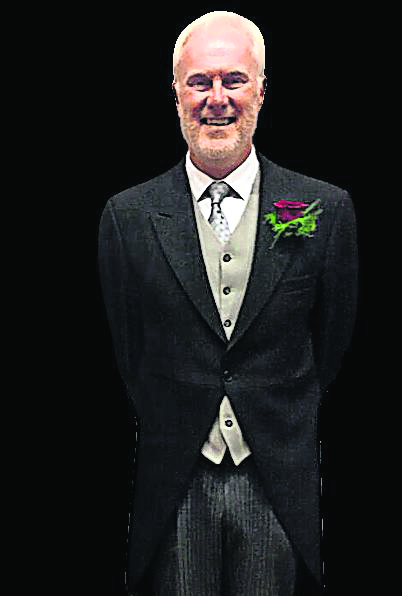
When the polymath and wit Barry Kelly was at medical school at Queen’s University, Belfast, his younger brother Owen lost his A-level revision notes. They finally turned up, with the “pages mysteriously cut up and stitched back together again with black thread’’. Thinking they were scrap paper, Barry had been practising suturing in anticipation of a glittering surgical career.
His dedication reflected “an extremely conscientious’’ student who, Owen said, “always did his homework straightaway — even on a Friday — so that he would have more time to revise for an exam that was still months away’’.
It was, finally, as a radiologist, writer and speaker that Kelly made his mark. According to his Bristol consultant colleague, Dr Paul McCoubrie, the author of Rules of Radiology, Kelly was “the Stephen Fry of radiology’’. He was credited with bridging the gap between what the novelist CP Snow called “The Two Cultures’’ — “the gulf of mutual incomprehension’’ between the sciences and the humanities.
His well-reviewed volume of short stories, The Docameron, published this January, highlighted the breadth of his interests, including Irish mythology, geopolitics, quantum physics and medical ethics.
Binding together art, poetry, literature, history, philosophy, science and medicine, his talks and lectures reflected a lifelong love of learning and an unwavering commitment to the founding principles of the NHS.
In 2019 he became only the third radiologist since 1827 to deliver the annual oration to the Royal Victoria Hospital, Belfast (RVH). Medical lectures rarely have such alluring titles as “The Rime of the Ancient Imager: Plato’s Cave and Other Shadows’’. Acknowledging his paraphrasing of Samuel Taylor Coleridge in the title, Kelly said that, ‘“like the flawed and wizened old mariner’’, he would present some pointers to a rapidly changing future.
Underlining the critical importance of compassionate medicine in a world of algorithms, he called upon his student audience to respect the critical importance of appropriate language to treat patients. He added: “Words are our scalpels. We need to be careful with them.”
A staunch advocate for professional wellbeing throughout his career, Kelly also emphasised the need for doctors to look after themselves, pointing out that the General Medical Council had struck off more than 170 doctors in the previous year, mostly “for reasons we don’t like to discuss”.
Kelly added: “At least 10 per cent of medical students and doctors have significant psychological issues. These are widespread and various but include addiction, personality issues, stress, burnout and so on. Two per cent of us are bipolar and we know that 1 per cent are potentially suicidal.
“This problem is increasing, particularly for junior doctors, due to what has been named the ‘toxic environment of uncertainty’. In their earlier school and university days there was always a solution and they would find it. In our chaotic world of 21st-century medicine with its multifactorial problems, understaffing and budgetary restrictions, they can crumble all too easily.”
Kelly’s talks would bind together art, poetry, philosophy, history and literature
Barry Kelly was born in 1961, the eldest of four children of Owen Kelly, a writer, podiatrist and teacher, and his wife, Mary (née McGerrigan).
Excelling at St Mary’s Christian Brothers’ Grammar School, young Barry read medicine at Queen’s, initially specialising in surgery.
Switching to radiology he became, in 1995, one of the few Catholic consultants at the RVH.
He met his wife, Susan (née Clarke), a nurse, while working as a surgeon. They had two daughters: Katie, a dermatologist in Glasgow, and Rosie, a foundation doctor completing postgraduate medical training in Aberdeen.
Kelly’s easygoing, charming but commanding manner and formidable intellect was a prerequisite for high office, including stints as dean of the Faculty of Radiologists and Radiation Oncologists at the Royal College of Surgeons in Ireland; and as president of the Ulster Radiological Society. He was also honorary reader in radiology at Queen’s University Belfast, and a professor at the University of Ulster.
A central figure in European radiology, he not only helped design and implement the European Society of Radiology (ERS) audit scheme but also establish radiation protection standards in collaborations with bodies such as the International Atomic Energy Agency.
Susan said that she and her daughters benefited immensely from his love of scholarship. He encouraged her to obtain her history degree, master’s and PhD. Kelly also loved the seaside family house in Donegal where he would garden, paddle-board, write and sit by the fire with Maple, the family dog.
He documented many memories in Donegal, including a talk in Dublin to an audience full of doctors recalling how much money they were making from private practice. As he was about to introduce Kelly, the chair said: “Remind me again, Dr Kelly. What is your speciality?” Kelly replied: “Radiology for the poor.”
Barry Kelly, doctor, was born on June 14, 1961. He died of cancer on June 22, 2025, aged 64

No comments:
Post a Comment