By the standards of natural selection, it’s true that Homo sapiens is the most “successful” current species. We’ve mapped the heavens, split the atom and are coming close to a single explanation of the universe and its workings.
We’ve bent a watery planet and its resources to a single end: the service of ourselves. But (and it’s quite a big “but”) we are also the only species of which one in a hundred is insane — and here we are not talking about depression, anxiety or eating disorders.
Across the world, regardless of climate, nutrition, ethnic variation and genetic drift, humanity is roughly 1 per cent psychotic. This figure is accepted by researchers worldwide. What do they mean by this? “Psychosis” is a form of delusional illness, most often characterised by hearing loud voices that are not heard by others; by seeing phenomena — often animals or other creatures — that are not seen by anyone else in the room; by sustained and uncontrollable extremes of emotion, be it elation or despair; or by unshakeable belief systems, usually involving persecution or conspiracy, that have no basis in the reality observed by others.
In my second year at Cambridge University I had just discovered alcohol and thought it might make up for the shortcomings of my personality. To begin with, I used it in addition to marijuana, nicotine and quantities of powerful cough medicine procured from the college nurse. I took to brewing my own beer. You could buy a kit from Boots the chemist. A few more pints in the college bar or in the town pubs would do the trick. By the summer term I had given up work altogether to devote myself to drinking.
My college friends remonstrated a little, but not much. There was no “pastoral” care and we were all experimenting with life as it came blundering towards us. I awoke one morning after a day-long binge and got up unsteadily from the bed. I was halfway through dressing when I woke up again. It seemed I had only dreamed my first awakening. I had finished dressing and was leaving the shared sitting room when I woke up again, still in bed. I climbed out once more, determined that I was now awake, dressed and crossed the room to brush my teeth in the small scullery. I got as far as the stairs when I awoke again to find myself still in the single bed of my college room.
On my next attempt I got almost as far as the dining hall, in time for the stillwarm fried eggs with the hard little caps on the yolk, when I awoke once more.
Each time it took an effort of will to force myself up, but each time I found I was still in bed. It took everything I had to get myself at last, physically, into the sitting room and cling to the table, praying that I was finally and truly awake. If I could get out of the college, maybe, or meet someone I knew and talk to them, I might snap back into the reality that for twenty years I had so foolishly taken for granted. Sweet reality ... How I would treasure it now — if only I could find it.
The next two years were challenging. I could barely hold the pen in Part One exams. In August, I had to come home from Greece when I awoke on a beach to find the sea dragging shingle through my veins. There were meetings with doctors, pills and a visit from a peripatetic consultant called Arkle, like the racehorse, who seemed to be the only psychiatrist in the south of England. There were panic attacks, agoraphobia, white nights of insomnia. I took a train to London to visit a faith healer in North Kensington; there was an afternoon trip to the Park Prewett hospital, the old county asylum in Hampshire.
It was a bad time for my parents, who had nothing to offer but baffled sympathy.
I remember standing with my mother in the kitchen listening to Desert Island Discs one day and telling her I didn’t think I could go on. “You will,” she said. “I promise you will.” The music was Ravel’s First Piano Concerto, where the melody runs like a clear stream in the Auvergne.
Thirty years later I chose the same music when I was interviewed on the programme, though I couldn’t bring myself to say why. My mother said she would think of me each day at five o’clock and send me strength. I went back for my third year and steadied up a little, using prescribed tranquillisers in place of marijuana, but still drinking to oblivion in the evening. I thought I sensed my mother’s willpower at the agreed time, but perhaps I imagined it.
I prayed hard to a childhood god I had forsaken
Rather than sit the full hand of final exams, I wrote two long essays, as you were allowed to do, and managed a respectable degree. Then I went to live in Bristol, where my old friend David was in his last year. I’d registered with a GP, and one day, after a panic attack had left me in despair, I telephoned him. I was worried that, in my attempt to recover from the episode, I had taken too many pills.
He came to the flat and drove me to a hospital outside Bristol, a place called Barrow Gurney, where I was put into a dormitory and slept heavily. I was able to discharge myself the next day, while agreeing that I would be treated as an outpatient, going in three times a week for group and individual psychotherapy.
My problem was that the world and everything in it appeared unreal. The table, the cup, the book, the window were like unconvincing replicas of the actual things. I felt that I had severed my link with the life I’d known and was now lost in a shadowland. The most urgent project was to believe that the material world existed.
I prayed hard to a childhood god I had forsaken. I tried to become a better person.
I had something called “abreaction”, in which you’re supposed to remember important things while sedated; it didn’t do much good. Slowly, very slowly, by accepting that I had no choice but to embrace what I still saw as an unreal world, I started to become better. It was, in retrospect, a mixture of the philosophical, the religious, the physiological and the inevitable. At the time, it felt like spring in the Arctic, when huge frozen blocks begin to thaw and move.
In the summer, I left Bristol and was offered a job teaching at a school in London.
My adult life began. I didn’t want to think about what I’d been through in the past two years. I had had some post-adolescent adjustment difficulties, that was all — a minor “breakdown”. It had perhaps had a biological element in the process of neurodevelopment that was coming to its conclusion; it certainly had a drink and drugs component. Yet if the experience had been that excruciating, what must it be like to be really ill? Madness has apparently been with us for ever. If you watch or read King Lear, you can see a depiction of senile dementia that is almost clinical. Homer’s heroes will do nothing until instructed by the words of an absent being. The New Testament description of John the Baptist is that of a casebook schizophrenic — of the kind you can see, sadly, on the streets of New York or London any day, arguing with the air. For thousands of years, it seems fair to conclude, human societies must have dealt with their oddballs as best they could — caring, shunning, stoning, loving or ignoring. The one thing they couldn’t do was understand.
It was not until after the scientific advances of the Enlightenment that ambitious Europeans felt ready to confront this enormous issue; and from about 1800, initially in Italy and France, the work began. Victorian Britain was late to join the European endeavour, but set about it with its own vigour and optimism. On the instruction of the government, each county built a large brick asylum with a water tower, a kitchen garden, a brewery and workshops for the “lunatics”. Local councils were required to foot the bills. Patients were brought in from the towns and villages in their hundreds, then their thousands. For the majority of patients, however, the move to place them in an institution, while well intentioned, was premature. The staff weren’t ready for them; they could only herd them together and observe.
Meanwhile, some patterns in the baffling symptoms of what is now known as schizophrenia were also being observed by doctors throughout Europe. Outstanding among these observers was the German Emil Kraepelin, who believed that many severe “mental” illnesses had a neurological base: in other words, that the patients’ bizarre behaviour and beliefs were not a response to the events of their lives but to a problem in the brain tissue.
In the absence of any observable neural basis for psychosis, researchers in the 20th century began to wonder if they had been going about it the wrong way. It was a question of returning to first principles.
What do we really know about this terrible experience that affects one in a hundred of us? Well, it appeared to run in families. Family studies of schizophrenia in the 1960s showed that you were much more likely to suffer from it if a close relation had it, too.
Yet it was a complex, not a simple inheritance. Just how complex began to emerge when they studied identical twins. They found that it was possible that one twin might develop the disease and the other, genetically identical, might not. The only logical conclusion from the identical-twin studies was that there must be more than just genetic agents at work; and these were termed “environmental” factors. This was nothing to do with climate or rainfall; it meant, essentially, life experience. This could include the emotional trajectory of a life, its stress and grief and joy, but more often it came down to drink and drugs. So if one twin smoked skunk, emigrated, drank alcohol, got sacked from her job and lived in bad housing she would find that the stress caused by these events played into a genetic predisposition and, as it were, lit the blue touchpaper; and the next thing you knew she was hearing voices. The other twin, who’d lived a purer, happier life, was able to escape the potential downside of her genes because the catalyst of bodily response to emotional dismay never made the final electrical connection in her brain.
It was only recently (in Control, a 2022 book about eugenics by the British geneticist Adam Rutherford) that I read the most convincing argument for the environmental factor. In Germany, from 1933, Nazi doctors sterilised or killed roughly 250,000 people they believed to suffer from schizophrenia. This accounted for between 75 and 100 per cent of all such patients. In 1945, therefore, the people with the genetic predisposition left alive or fertile should have been close to zero.
Yet within 30 years, the incidence of schizophrenia in the German population had not only rebounded but had exceeded pre-Nazi levels. The only logical conclusion is that it was the poverty, hardship and malnutrition of postwar Germany that were responsible for activating potential psychosis.
The implication for the human genome is frightening, however. It seems that it is not just one in a hundred of us who is incorrectly wired, but many, many more. We are a very young species and it may take more millennia for our complicated software to bed in.
I visited some Victorian asylums while researching my 2005 novel Human Traces but I was too late. In the 1990s, a few years earlier, the government had decided to close down the old asylums and offer the patients instead something called “care in the community”. As it turned out, there was little care and no “community”. There was only the world at large, which hardly cared at all, while a community, however ramshackle, was exactly what the patients were leaving behind. But the “c-word” had been snapped up by politicians as a replacement for “society” because it implied pre-existing concern and mutual help — which excused them from having to provide any.
This is the unhappy situation in which we still find ourselves today.
Pharmaceutical companies have spent millions of dollars on trying to find drug treatments that can alleviate the symptoms more subtly than the so-called “chemical cosh” that is all we have now.
Sadly, the research has not always been undertaken in good faith; it has often resulted in findings that suggest a drug made by the sponsoring company is the best answer. “Big pharma” companies, including GlaxoSmithKline, Johnson & Johnson and Pfizer, have been fined billions in both civil and criminal cases.
There is despair in the profession at how unhelpful the categories of diagnosis appear to be. Future psychiatry may well abandon all diagnostic labels and grade people only on a scale of distress, from the happy individual who’s never had a sleepless night at one end, through to the poor person who barely functions at the other. We are all on there somewhere.
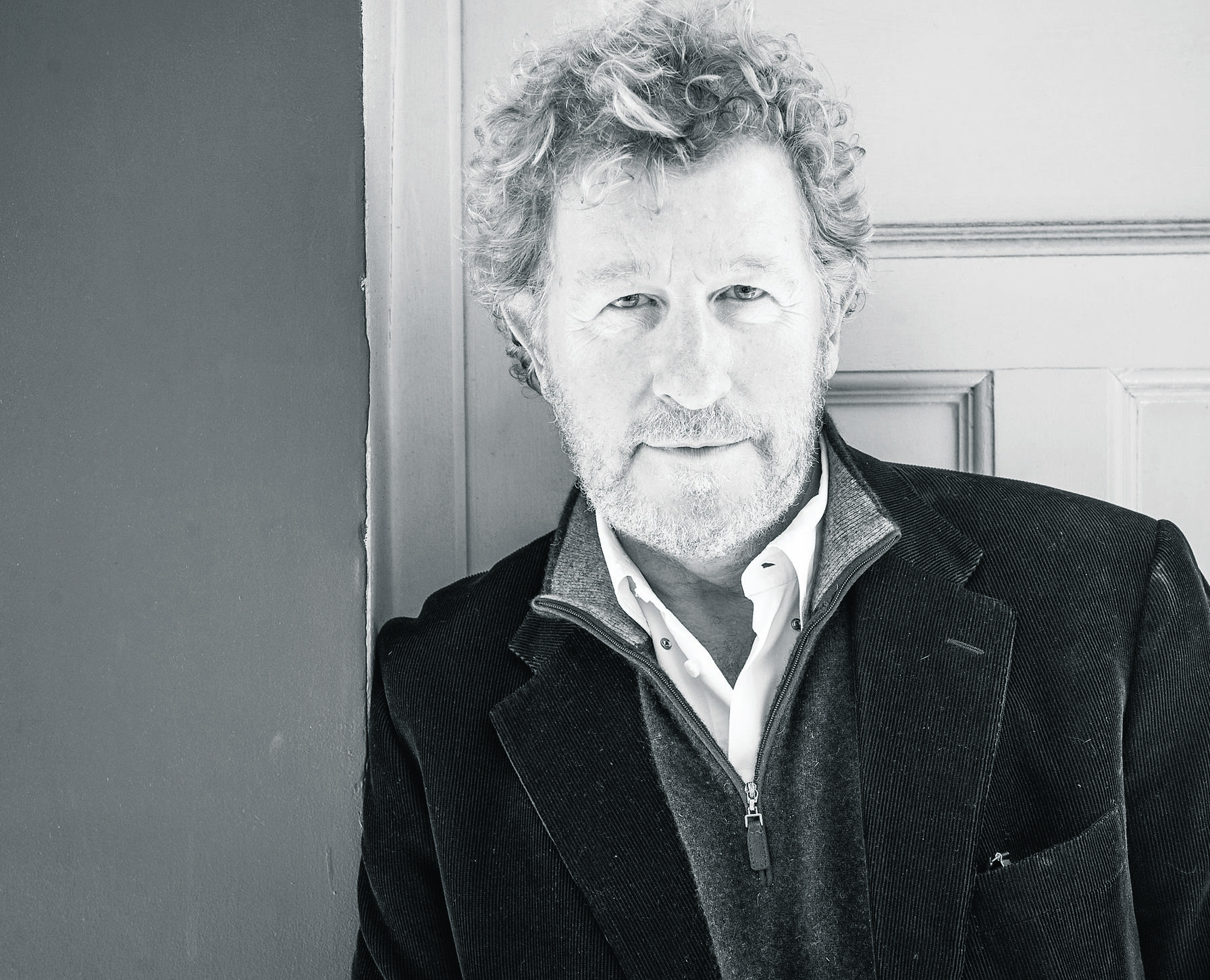
This is an edited extract from Fires Which Burned Brightly: A Life in Progress by Sebastian Faulks, out on September 2 (Hutchinson Heinemann, HBK, EBK, Audio, £20). To order a copy go to timesbookshop.co.uk or call 020 3176 2935. Free UK standard P&P on orders over £25. Special discount available for Times+ members

No comments:
Post a Comment