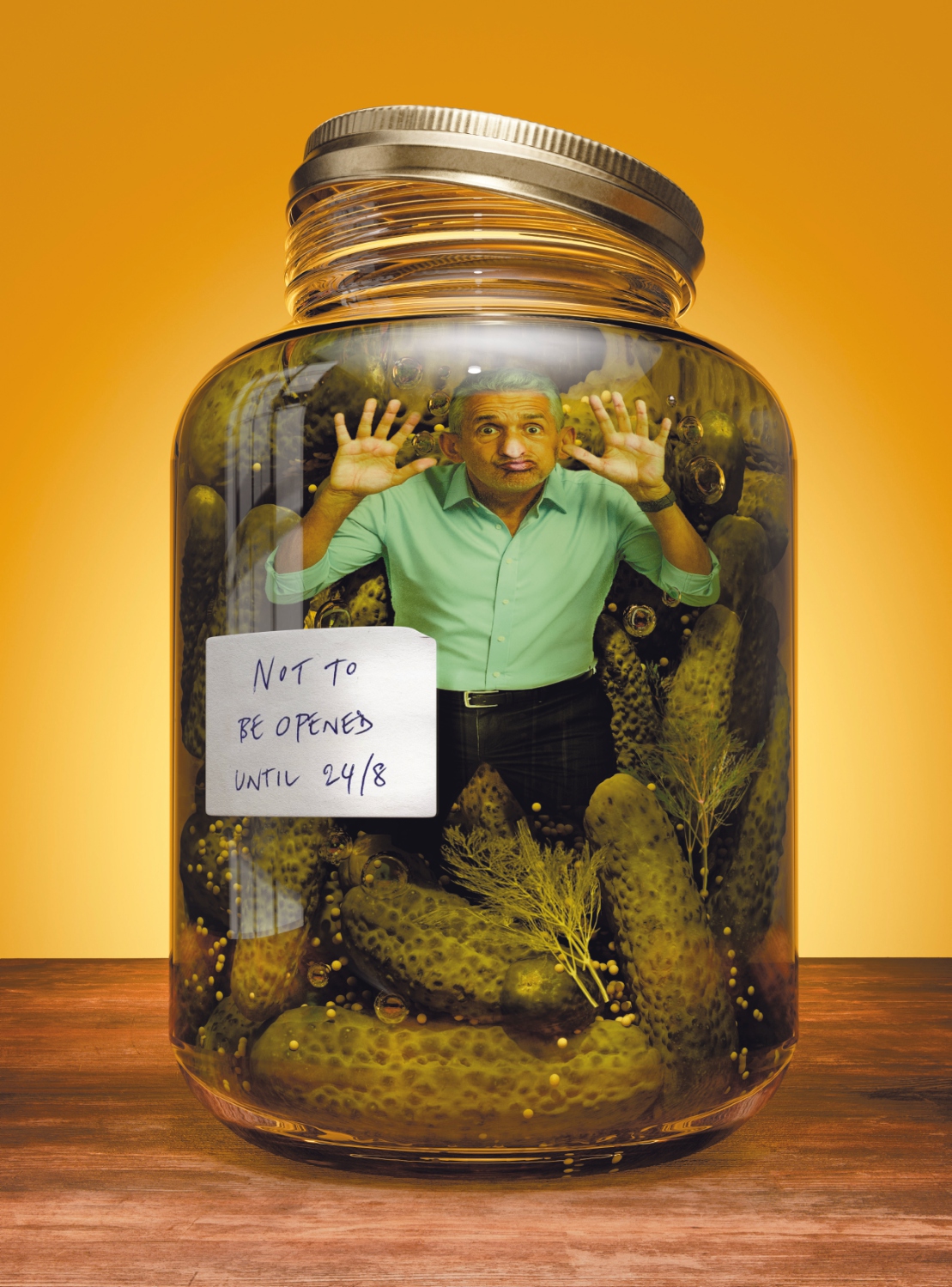
In 2024 my research team performed one of the largest trials of a new supplement, with nearly 10,000 UK volunteers. For three weeks they were asked to take three doses of the supplement every day and monitor changes to their health. The results were amazing. Nearly half of participants (47 per cent) saw improvements in mood, 55 per cent reported more energy, 52 per cent less hunger, and 42 per cent a decrease in bloating. But it wasn’t a new commercial supplement we were testing, but ordinary, shop-bought fermented foods, such as sauerkraut, kefir, yoghurt and kimchi. If these results had been for a new vitamin supplement it would be a blockbuster. That all these benefits could come simply from adding such humble ingredients to your diet is even more astonishing.
When I started to experiment with fermented foods in my own diet, I soon became converted to the cause. I began making kombucha (fermented tea) with my trusty symbiotic culture of bacteria and yeast, my “scoby”, affectionately known in my house as Blob. Before long I found myself adding fermented vegetables to almost every meal and enjoying my sour morning kefir (fermented milk) with nuts and berries more than any other breakfast. I made my own version of kimchi — “Timchi” — from fridge leftovers and found I loved the taste, as well as its benefits for avoiding food waste.
I was glad to discover that red wine and maybe artisanal ciders (in moderation) have a beneficial effect on our heart and our microbes. I now find that I have to be doing some regular fermenting to feel happy as well as healthy.
The science of fermented foods is evolving fast. Here’s what you need to know — and why you should try to eat three servings a day.
What is fermentation?
Of all the ways to prepare food, fermenting is surely the most mysterious, miraculous and misunderstood, yet humans have been finding ways to ferment plants, dairy and meat for thousands of years as a means of preservation and enhancing flavour. Fermentation simply means the chemical transformation of any food or drink with the help of yeast, bacteria or other microbes, often producing bubbles or heat. Raw, whole foods already contain hundreds of compounds; however, once bacteria or fungi have worked their magic, these compounds multiply and foods become vastly more complex. As these fermenting microbes feed on the food or drink, they produce hundreds of new and unique compounds. Wine is infinitely more complex in flavours and chemicals than grape juice, as is cheese compared with milk. We now know this ancient process of alchemy not only transforms the flavour of the food, making it more complex, varied and delicious, but it also brings a multitude of additional health benefits.
Why are ferments good for us?
One of the reasons fermented foods are better for us than just eating the raw form is that they are, in essence, double fermented. The first ferment is in the jar, which you can witness unfold with its new smells, bubbles and changes in colour, texture and flavour; the second you have to imagine — in the darkness of your bowels. That first ferment means that your resident gut microbes can skip all the boring prep work and get on with cooking their ideal meal, giving them all the nutrients they need.
This ancient process of alchemy not only transforms the flavour of food but brings a multitude of health benefits
A simple example is the way lactose (the sugar present in milk) is predigested by external microbes when you make yoghurt, cheese or kefir, so our own gut microbes have much smaller bites of lactose to deal with and are therefore far more effective in splitting it into tiny sugars that are easily absorbed. This is why many people with milk intolerance or lacking the lactase gene mutation (80 per cent of the planet’s population) can cope with eating fermented dairy but not drinking fresh milk.
Types of ferments
Fermented foods can be divided into three broad types: probiotics (microbes), prebiotics (food for microbes) and postbiotics (dead microbes). They all confer specific health benefits.
Probiotics
These are defined as live micro-organisms, most commonly bacteria, that can benefit your health when you consume them in large enough quantities. They appear both in fermented foods and as capsules containing the microbes, as individual strains or as mixes. In general, fermented foods provide a greater range of microbes than found in most probiotic mixes, though science in both areas is changing fast.
Prebiotics
This is a general term for compounds that feed your gut healthy bacteria and are shown to have health benefits. For instance, there are types of dietary fibre abundant in plant-based foods that will nourish your gut bugs. Examples might be the cabbage in sauerkraut or the soy beans in miso.
Synbiotics
This just means a mix of prebiotics and probiotics where the addition of the prebiotic is shown to benefit the probiotic. So if you dipped some high-fibre fruit, such as berries, into natural yoghurt, you could consider that a homemade synbiotic. Manufactured synbiotics often contain some form of manufactured fibre such as inulin with a probiotic in a capsule or powder, making them more expensive. Sauerkraut and kimchi are great examples of natural fibre synbiotics.
We have underestimated the complexity of microbes, which appear to have a successful afterlife
Postbiotics
This is a new but important concept. They can be any mixture of whole or fragments of dead micro-organisms, or the compounds or even the liquid they produced when alive. As examples, postbiotics could include parts of bacterial cell walls or metabolites that bacteria produce as they break down the fibre in your cabbage.
The “zombie” microbe revolution
I always thought that these “dead” postbiotics were useless, and that commercial pasteurised or heated microbial products were essentially a con, along with probiotic supplements. It turns out I was wrong. New science has once again shown we were underestimating the complexity of microbes, which appear to have a successful afterlife.
We now believe postbiotics can provide health benefits through the chemicals they produce or from proteins on their cell lining. So far these zombie microbes only appear to be helpful, not harmful. Even mistreated microbes that have been neglected, overheated, pasteurised, frozen, starved or overfed on sugar can still provide some benefit. This means that some beers with dregs of dead yeast in them could have some health benefits, which might partly help to compensate for the negative impacts of alcohol.
That dead microbes are beneficial to our health isn’t so strange when you think about how many vaccines work. Vaccines can be both alive and dead, or at least inactivated. You can now purchase a few commercial postbiotics in supplement form that have been clearly shown to work and they will become more common in the future.
How fermentation helps: the new science
Digestion and gut health The act of fermentation usually increases the digestibility of the food, breaking it into smaller pieces, which our bodies can deal with more easily without triggering an immune response, and extract more nutrients, producing a greater variety of healthy chemicals. Some studies report initial bloating when starting to eat fermented foods for the first time, but most show a reduction in gut symptoms over time.
A thin layer of cells and a thicker wall of sticky mucus separates the billions of microbes in the gut from the blood vessels that supply our gut and enter our circulation. Fermented foods and fibre play an important role in maintaining this barrier. When we lose the mucus layer, the tight structure breaks down and the system leaks, causing inflammation. This may be a reason fermented foods are helpful to many people suffering with colitis or IBS, with many people writing to tell me they were able to reduce or stop their medication.
Balancing the gut microbiome
Microbial diversity has been shown in countless studies to be a crucial indicator of health, with low diversity associated with every common western health problem, from depression to diabetes, allergies to autoimmune disease, and poor response to anticancer drugs. Ferments improve microbiome health by stopping overgrowth of pathogens and encouraging greater species diversity. The probiotic components of the foods will also increase the amount of healthy bugs and reduce unhealthy ones. In several studies by Zoe, the nutrition company I co-founded, we have shown this good/bad ratio of 100 common microbes is a more accurate indicator for heart and metabolic health than simple diversity.
Hunger and weight maintenance
We now know that microbes play a role in hunger and satiety, and some microbes can secrete hungersuppressing chemicals such as GLP-1, the basis of drugs such as Ozempic. Some probiotic companies promote their products as a cheap form of Ozempic, but the effect of these chemicals in real life is as yet unclear. Our own Zoe Ferment study did show that hunger reduced significantly during the study in 52 per cent of volunteers (it increased in 25 per cent).
Some microbes secrete hunger-suppressing chemicals such as GLP-1, the basis of drugs such as Ozempic
Supporting the immune
system Nearly 80 per cent of all our immune cells are lining our gut, and a well-functioning immune system is crucial to our health. It prevents allergies, infections, autoimmune diseases, cancer and — importantly — regulates inflammation, which is the regular healing response of our body to everyday stresses such as bad food choices, emotional stress, pollution, obesity and a number of diseases. Persistent low-level inflammation is associated with nearly every common disease such as osteoarthritis, back and chronic pain syndromes and most immune and mental health disorders. It also predisposes us to heart disease and strokes. Inflammation in brain vessels can lead to dementia.
Inflammation was also a key risk factor for severe Covid. During the pandemic we surveyed half a million people with our free Zoe app and found that those taking probiotics or eating fermented foods regularly had less severe Covid symptoms (by 14 per cent) in the following year than those taking vitamin C, zinc, garlic or nothing. This is not proof by itself, but combined with other data and the negative effects of other supplements it is compelling.
Boosting energy
Our Zoe Ferment study showed that 52 per cent reported an increase in energy. Tiredness is a common sign of low-level inflammation and activation of the immune system, so suggests a rapid action of ferments on the immune system. Many people suffering with conditions such as rheumatoid arthritis or ulcerative colitis have told me in person at my lectures how ferments have improved their energy levels and reduced fatigue.
Managing cancer
There is growing interest in using diet and ferments in the treatment of cancer, and inflammation is now linked to increased risks of all types of cancer. The likely mechanism is that if the immune system is constantly firefighting and dealing with low-level inflammation all the time, it has less time and resources to deal with early detection of rogue cells that, if ignored, turn into cancer cells. Many studies and meta-analyses of epidemiology studies have linked yoghurt intake to a 20 per cent lower cancer risk — especially of the colon.
New immunotherapy drugs are transforming cancer treatments; I co-led large studies on advanced melanoma, which showed the vital importance of good gut health in having a life-saving response to these drugs. I generally recommend anybody starting cancer treatments with immunotherapy to maximise their gut health through their diet, including eating more fermented foods. Anecdotally, patients have reported having fewer side-effects on both chemotherapy and immunotherapy if they also take fermented foods, but this needs more studies.
Mental health
Fermented foods have been shown to improve general mood, as well as specific conditions including anxiety, depression and possibly ADHD. Brain imaging studies have shown significant changes in the emotion centres after drinking fermented milks. Some studies suggest effects at least as large as antidepressants. Our much larger Zoe Ferment study confirmed this with a rapid improvement in mood after increasing ferments in 56 per cent of people; in most people they noticed changes within a week.
We now know that the gut and the brain communicate. This has huge implications for how we view mental health
Until recently we had only a rough idea why mood changes via the gut. A prevailing view was that it was a failure of the gut to remove toxins, which caused these to leak into the blood and cross the tough-to-penetrate blood-brain barrier. Now we know of many new mechanisms. The first is that microbes in the gut can produce brain neurochemicals themselves (serotonin, tryptophan, GABA and dopamine as examples) that can travel to the brain directly. Other signals from food can pass via the vagus nerve or via signalling from the immune cells lining the gut.
For me the most exciting new mechanism is that gut immune cells can sense inflammation in the gut lining and send signals directly to the brain that tell it something is not right. The brain then responds by going into depression or anxiety mode. We now know there is no real barrier to the gut and the brain communicating directly, whether via chemicals, immune cells or nerve signals. It makes more sense to think of the brain as a key organ that the gut communicates with.
This has huge implications for how we view and treat mental disorders that might be more problems of abnormal reaction or sensing of the external environment than something purely internal to the brain.
In evolution, one of the earliest multicelled creatures was the hydra. It initially evolved as a simple tube with food going in one end and waste out the other; eventually nerves developed around it to help the tube move. This suggests that the large, complex nerve network around our guts, which we call our second brain, was actually our first, and we should pay it more respect.
© Tim Spector 2025. Extracted from Ferment: The Life-Changing Power of Microbes, published on September 11 (Jonathan Cape £25). Discount for Times+ members at timesbookshop.co.uk

No comments:
Post a Comment